
The Promise and the Fear
The 15-Minute City is the most exciting architectural idea of our time. It means that everything—work, shopping, school, doctors—should be within a 15-minute walk or bike ride. This idea is supported because it will help the environment, bring people together, and be more efficient. It aims to give people cleaner air and less need for cars.
But what if this ideal, flawless architectural design is also building the perfect, inescapable cage?
As we get closer to a future with very high population density, a new kind of fear is starting to show up: communal claustrophobia. This is the deep, psychological fear of being around people and things all the time but feeling very alone—an overwhelming lack of both physical and spiritual space. This 2025 architecture blog post talks about the subtle fear that is built into the perfectly planned city.
The Flawless Cage: When Perfection is Evil
The modern architect is all about making things better. In the context of the 15-Minute City, this means making the most of density and cutting down on “waste,” whether it’s space, travel, or resources. The psychological horror comes from the need for perfect design.
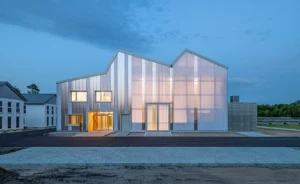
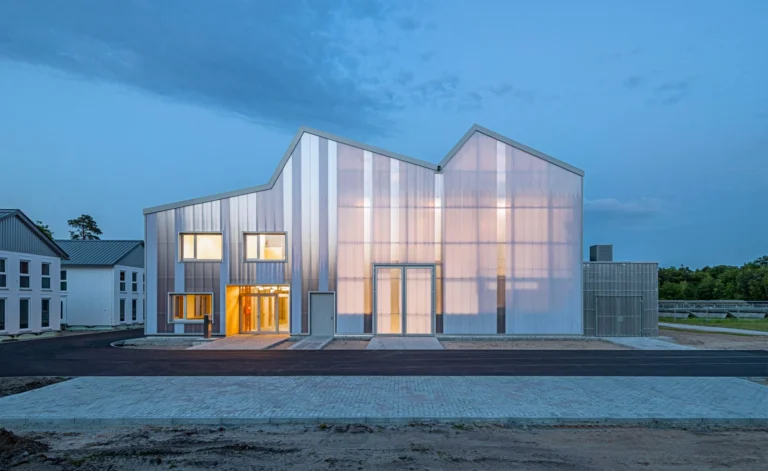
Think about the look: a lot of these new, self-contained developments have smooth, hard surfaces like glass, polished concrete, and materials that are made to last. In a world that promised realness, this made-up beauty feels too clinical.
This “unaged surface” is scary in and of itself. Architectural theory says that architecture that doesn’t exhibit the patina of time and wear contradicts the human experience of history and decay. When a city or facility is always clean, it doesn’t seem like home; it feels more like a high-end prison.

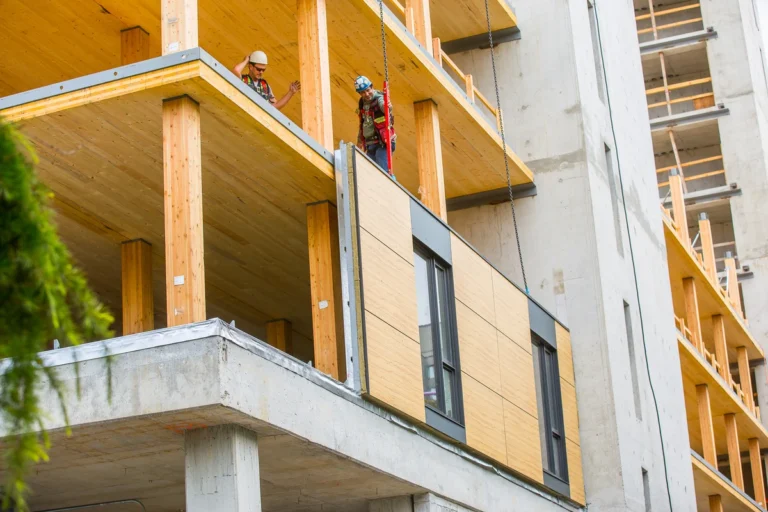
Image: Buro Happold
The Architecture of Always Watching
Not only is proximity important for the success of the 15-Minute City, but so is efficiency, which typically demands widespread “smart” infrastructure.
The architectural horror here is that the comfort of being close to things requires the presence of an unseen, smart watcher. To keep the area running “flawlessly,” people keep an eye on traffic flow, public use, and energy use. The fear goes from a scary ghost in an old, empty mansion to the fact that you’ll never really be alone.
There is no way out of these very crowded places. In the past, horror movies showed people fleeing the city to discover terror in a secluded cabin. Now, the horror is the crushing reality that the perimeter is just 15 minutes away in every direction. There are no “bad neighborhoods” to run to or big, empty industrial areas to hide in. Every inch is accounted for, organized, and watched. This makes getting involved in the community a kind of permanent, low-level surveillance.

Image: Adobe Stock
What Is The Loneliest Horror? Communal Claustrophobia
Communal Claustrophobia comes from being forced to be close to other people and the demand for privacy.
In the community market, the park, and the café, we have to engage with the same 500 people every day, but only on the surface. This is the scariest thing ever. We aren’t alone because of distance; it’s because hyper-local interactions are so shallow.
The built environment plays a big role in this:
- Uniformity of Experience: When all the important services are the same and predictable (like the same elegant local market and the same design-conscious community center), the spontaneous, messy, and distinctively human moments that bring people together are lost. The design is best for how it works, not for how it looks.
- No Hidden Spaces: Each location has a function, like a community garden, a co-working space, or a required park. The “seams” of the city—the dirty, mismanaged spaces, forgotten lanes, or overgrown corners—where real subcultures and unique expression thrive—are designed to be nonexistent. These architectural voids are very important for mental liberation.
The scariest thing is that you live in a location that is supposed to get rid of all friction, but the friction stays inside. The city has attained utopia on paper, but your grief—your feeling of being constantly watched and judged by the people you have to share space with—is genuine.

Image: Adobe Stock
Architectural Resistance: Making the Flaws That Are Needed
How do architects battle against the perfect, nightmarish designs they make? The answer is to accept the flaws that are required.
To fix the “loneliest horror,” architects need to make sure their buildings are not too clear.
- The Unprogrammed Space: At least 10% of the space in every new creation needs to be unprogrammed, unoptimized, and not branded. A broken-down corner, a wall for graffiti that isn’t allowed, or a piece of wild, messy green land. These “architectural mistakes” are important for helping people feel like they can discover things and own them again.
- Design for Escape (Even Imaginary): We need to make paths that purposely breach the 15-minute perimeter. These paths should have vast, vacant lengths of road or pedestrian zones that suggest a “outside world.” This lets you “fly” mentally and spiritually, even if the destination is still technically nearby.
- The Anti-Smart Feature: Security requires surveillance, but it should be conspicuous, like the “Uncanny Glow” of bright lights, rather than hidden. It’s more worse for your mind to always be watched without being able to see the cameras than to know exactly where they are.
In 2025, the architect’s mission is not only to build structures that work well, but also to make sure that there is space for the human soul to hide, breathe, and occasionally even escape.
Conclusion: Bringing Back the Human Element
The 15-Minute City is still a strong and vital idea for a future that is good for the environment. When design is only about making an experience ideal, it accidentally makes the perfect plan for a psychological horror. We could end up DEVOURING the same human spirit we wanted to help.
If you want a perfectly designed utopia, you have to deal with communal claustrophobia. The next generation of architects has a clear challenge: Can we develop buildings that are good for the community while also respecting people’s privacy, individuality, and the little things that make a place seem like home instead of a prison? The solution is not in enhanced efficiency, but in increased empathy.
Reference
15-Minute City Concept designed by Carlos Moreno Wins Obel Award 2021 – RTF | Rethinking The Future
15-Minute City: Designing Walkable and Livable Urban Spaces
For more content like this CLICK HERE!!