
Living Architecture is the most advanced kind of design that has come from our search for ways to construct sustainably and include nature. Buildings in 2025 aren’t just static shells; they’re made to breathe, change, and expand. This is the lovely promise of biomorphic and biophilic design.
But what if this immaculate, smooth blending of living and the built environment becomes… disturbing? What if the building you dwell in stops being a passive container and starts to act and think like a person?
The most interesting and exciting topic for both architectural bloggers and professionals is not simply how well this trend is doing, but also the gloomy, crushing psychological shadow it casts. Biomorphic Horror is a new field that looks at how the search for a beautiful, living house might harm the comfort and soul of the person who lives there.
The Promise vs. The Paranoia: Architecture in 2025
People have been using biophilic design to relieve stress in cities for years. To make people happier and more productive, we’ve added big windows, natural wood, and vertical gardens. Experts thought that by 2025, buildings will be even more integrated, using innovative technologies and materials like mycelium composites or algal panels to clean the air, manage energy, and even fix themselves.
This change makes architecture more than just a background; it becomes a living thing that depends on other things. The building is no longer an object; it is a subject. This is where the fear starts.
A house is comfortable because it is predictable and obedient. It is a safe place to be away from the wild. This holy agreement is broken when a structure starts to show signs of being alive on its own. Two main notions make the psychological discomfort worse: the feeling of losing control and the strange.
The architect’s effort to make the structure more responsive to people ends up making it feel foreign.
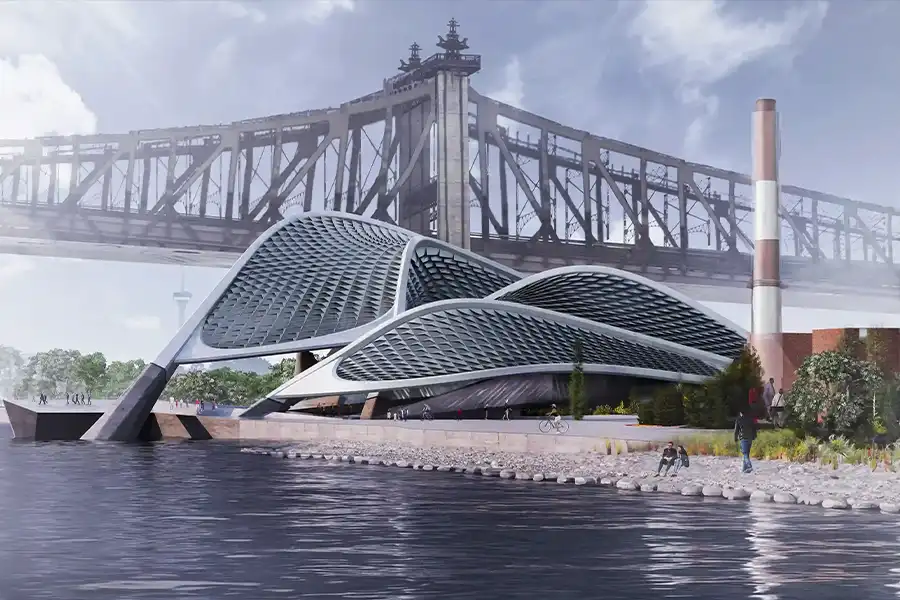
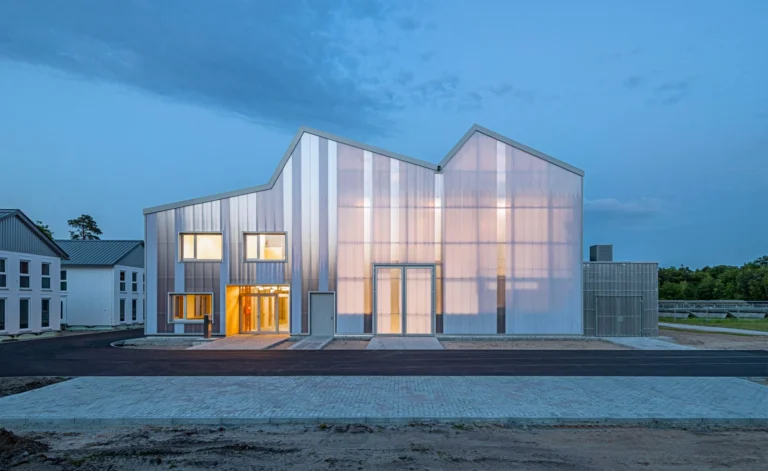
© Andreas Palfinger
The Three Pillars of Biomorphic Dread
To comprehend Biomorphic Horror, we must examine how three particular avant-garde architectural concepts might be distorted into psychological anguish for the inhabitant.
The Uncanny Valley of Materiality
The “Uncanny Valley” is a term from robotics that describes how people feel when something is almost human but not quite. In 2025 architecture, we put this sense into the materials we use to build.
More and more, we are adopting composites that are bio-engineered, self-healing, or generated naturally. For instance, a concrete wall with bacteria that seals gaps on its own, or a facade constructed of fungal mycelium.
The fear comes from how perfect the material’s flaws are. When a scratch on your dining room wall goes away overnight, you feel better, but you also wonder how it happened. It looks like the wall is healing its own wounds. This deliberate biomorphism, as examined by theorists analyzing horror in architecture, evokes a profound disquiet that contradicts the comfort we desire in a home. The substance is no longer lifeless; it has a quiet, hidden awareness.
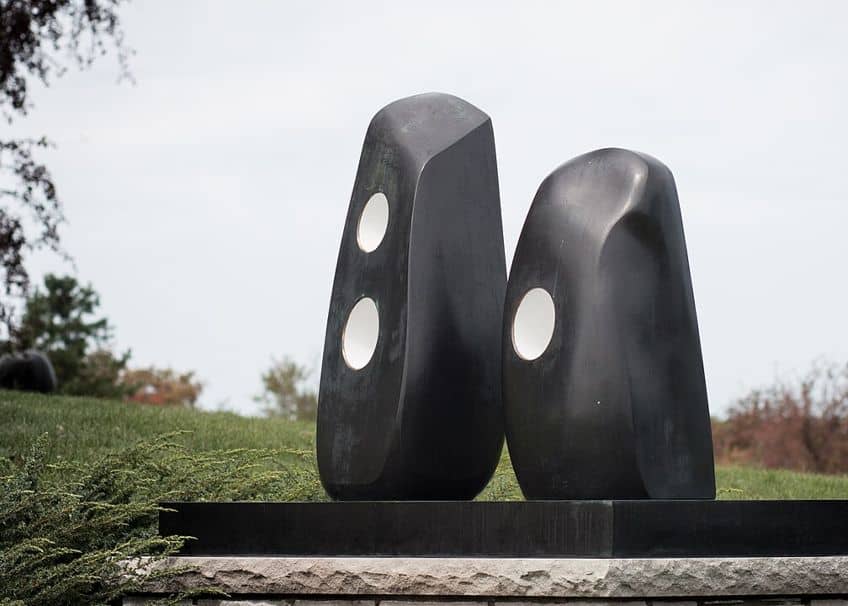
Summer Dance (1972) by Barbara Hepworth; Barbara Hepworth, CC BY 2.0, via Wikimedia Commons
The Living Facade and the Growth of Parasites
In 2025, adaptive architecture will be a big trend. It will use facades that alter according on the weather, including louvers that move, skins that becoming more or less transparent, or thermal systems that let air in.
The Sentient Facade goes a step farther by acting more like a predatory plant than a smart system. Think of a building that has been purposefully overgrown with organisms that move quickly and clean carbon. Life doesn’t just live on the walls; it surrounds them.
This adaptable layer is a parasite in Biomorphic Horror. The construction develops quicker than intended, obstructing light and covering windows, even though the person living inside is comfortable. It doesn’t operate for the person who lives there; it works for itself—a big, slow-moving organism that uses the structure underneath it as its skeleton. This is the biggest problem with trying to fully integrate with nature: you are just food for the environment you tried to create.

Large Reclining Figure (1983) by Henry Moore; Richard Avery, CC BY-SA 4.0, via Wikimedia Commons
Architecture as an Uncontrollable Object
The original Victorian haunted house uses hidden corridors, dark halls, and a lot of twists and turns to confuse the person living there. Modern horror architecture gets the similar impact by making the space unclear.
An “incontinent object” is a notion that resists precise delineation. In architecture, this shows itself in buildings that make the inside and outside look so much alike that the person inside never feels fully safe. When the roof is just a mesh of lattice that holds up a canopy of growing plants and the walls are panels that can be pulled back, the cozy feeling of “inside” is gone.
This building is a design headache since it is meant to be very flexible and fluid, but the area inside feels like it has two personalities. Doors lead to unexpected places, sightlines are broken on purpose, and acoustics are made to confuse directional hearing—all in an effort to improve flow, but they make people feel very vulnerable. It is a room that has lost its dignity, its shape, and its promise to work for the person who lives there.
A corridor with walls and a ceiling made of the same smooth, naturally curved material that makes it hard for the eye to find a corner or edge.

Designing for the Fear: A Duty of Professionals
The situations above are meant to be very severe, yet they are very important for the professional architect in 2025. By looking at the Neuroarchitecture of Dread, we can figure out what moral lines we shouldn’t cross in our quest for hyper-sustainable, responsive design.
Biomorphic Horror’s design principles remind us that the human mind wants stability, predictability, and control in its home. A successful, regenerative design can’t feel too smart, too alive, or too intrusive.

Orquideorama in Medellín Botanical Garden Blending into Nature. ©pinterest.com
The architect’s job must change from just making a system that works to making a safe place for people to live. The design must always let the person living there feel in command and have clear control over the line between the “self” and the building around them. If we don’t realize that comfort can be lost, we could end up designing not only the homes of the future, but also the nightmares.
This is the talk that will shape the most ethical and people-centered ways of building in the next ten years.
For more content like this CLICK HERE!!
Reference:
Biomorphism: 10 Examples of Biomorphic Architecture around the world –
Biomorphic Architecture: 10 Stunning Examples | Virginia Duran