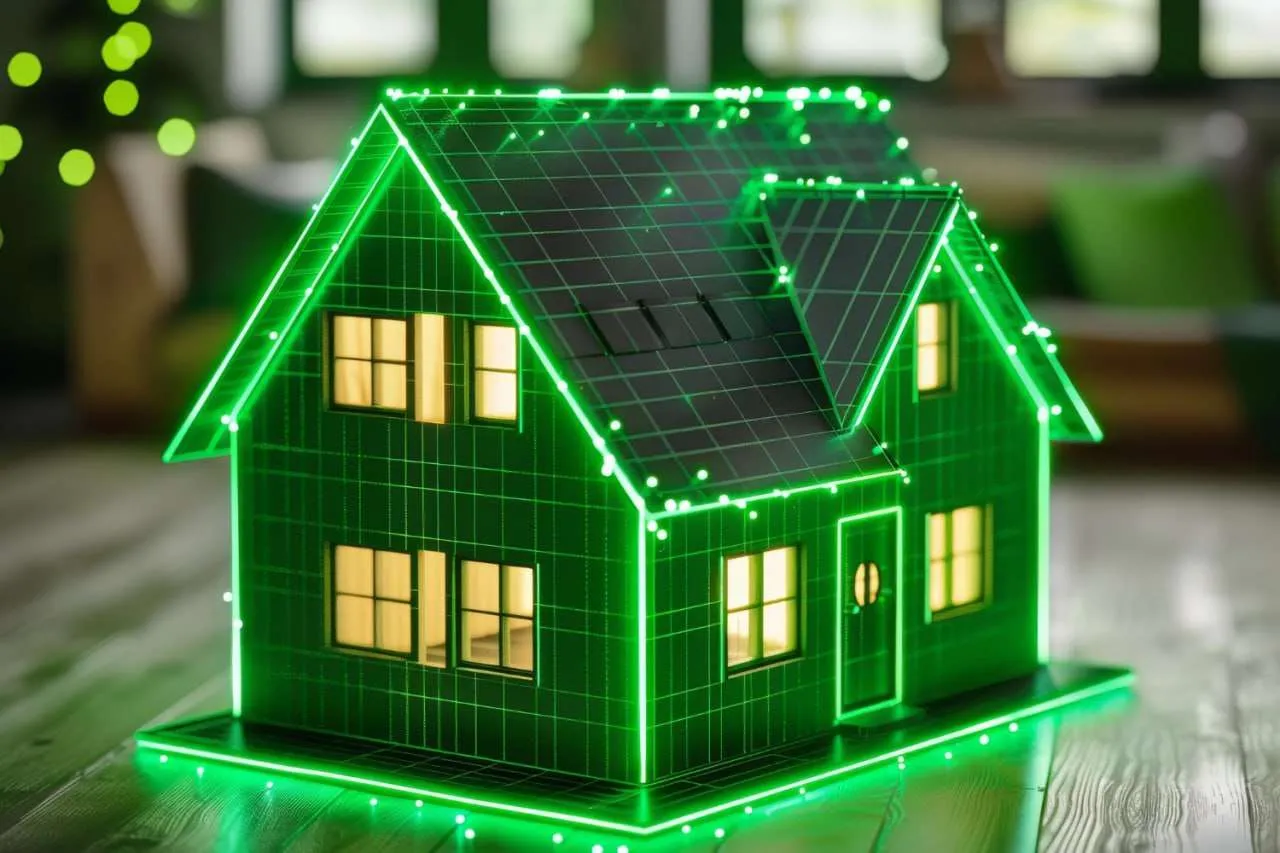
The Untapped Potential of Europe’s Old Infrastructure
You can see history all around you in any European city, from the Haussmann blocks in Paris to the socialist-era apartments in Berlin or the Victorian terraces in London. But behind these pretty exteriors is a shocking truth: 85% of buildings in the EU were built before 2000, and almost 75% of them don’t use energy efficiently.
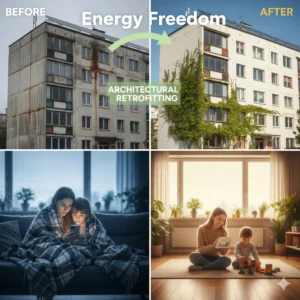
These buildings have been “leaking” energy for decades, which is why they utilize around 40% of the EU’s energy and release 36% of its greenhouse gases. But a revolution is happening. Architects used to only use the term “net-zero retrofitting” as a buzzword, but now it’s a life-saving medical operation for old buildings that turns “energy vampires” into high-performance, carbon-neutral residences.
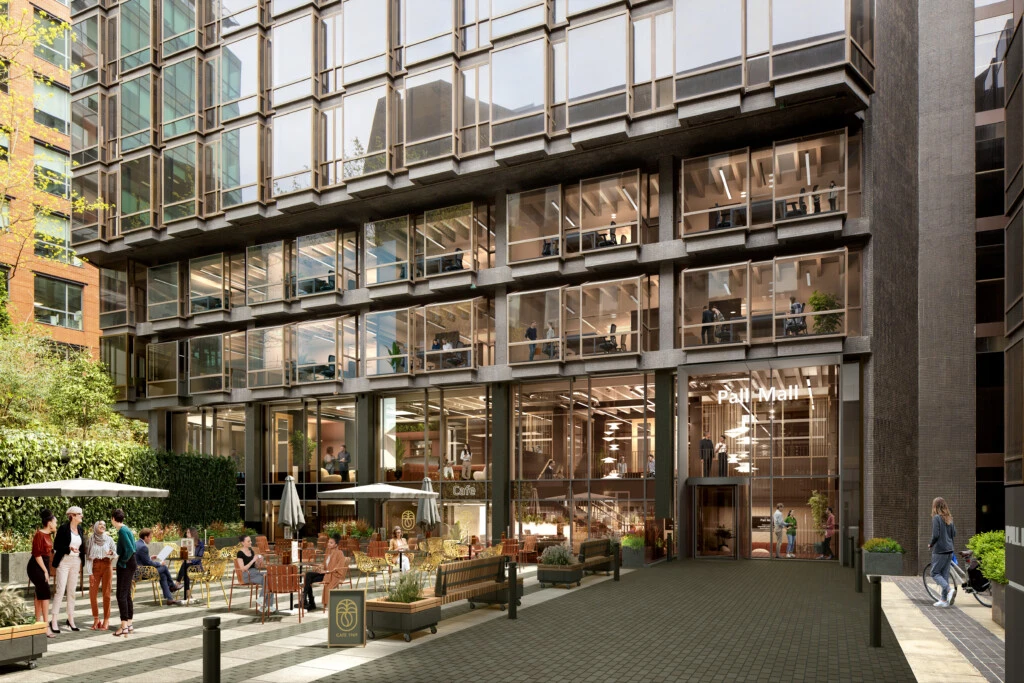
What is Net-Zero Retrofitting, Exactly?
Net-zero retrofitting is the process of making an old building more energy-efficient such that it uses as much energy as it makes from renewable sources. A deep refit goes further than a regular renovation, which can only mean painting the walls or putting in a new kitchen. It tackles the building’s “skin” and “organs.”
There are two goals:
- Reduce demand: Make the building so energy-efficient that it doesn’t need much energy to stay warm or cool.
- Maximize clean supply: Use renewable sources like solar panels or heat pumps to meet that last little bit of demand.
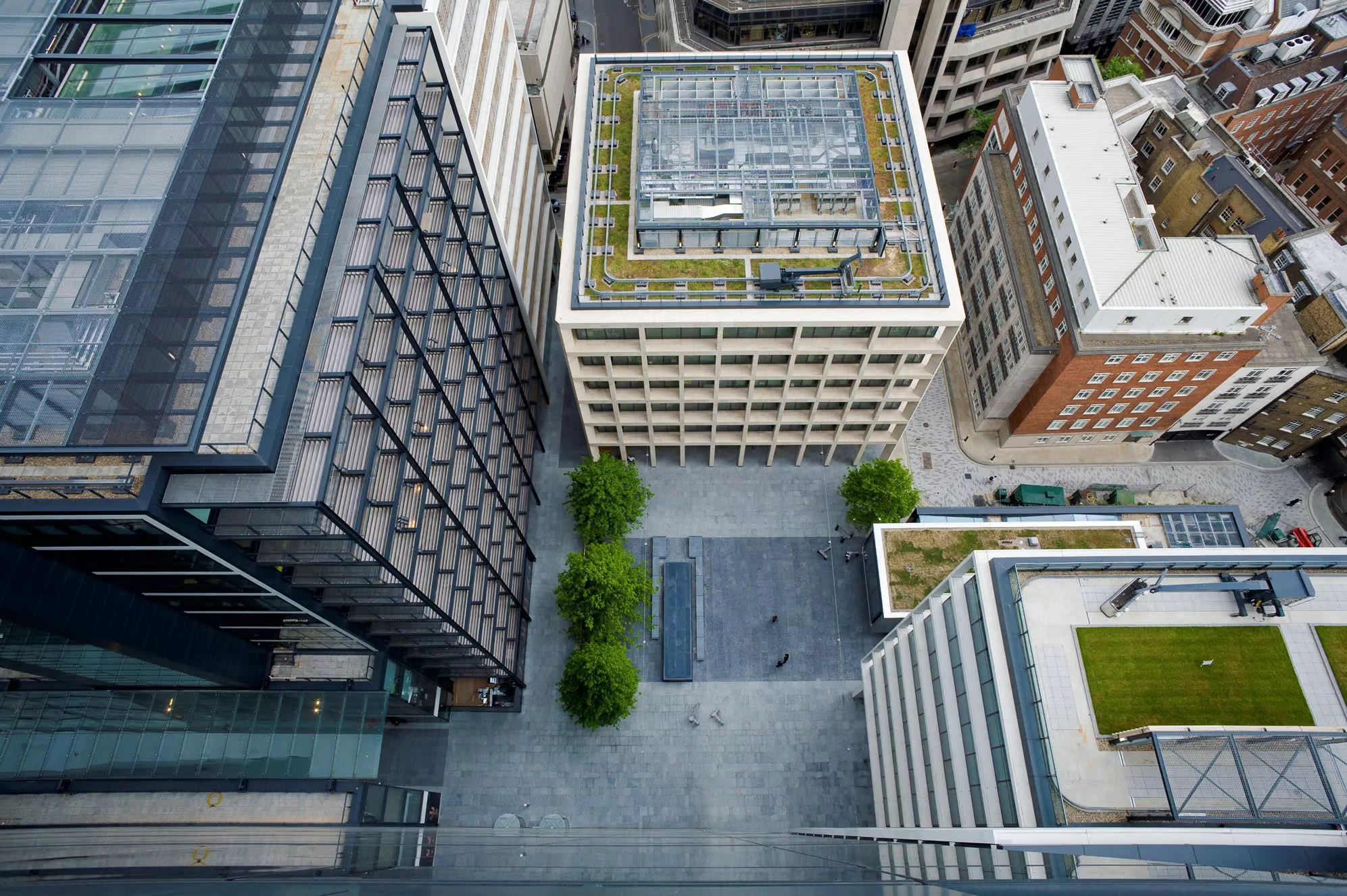
The Three Parts of a Change That Will Make It Carbon-Neutral
Experts usually use a “fabric-first” method to save an old dwelling. Putting a solar panel on a roof that leaks won’t make it net-zero. First, you need to correct the leaks.
The High-Performance Building Envelope
The “envelope” is what keeps the inside and outside apart. In older European apartments, heat can get out through thin walls and windows with only one pane of glass.
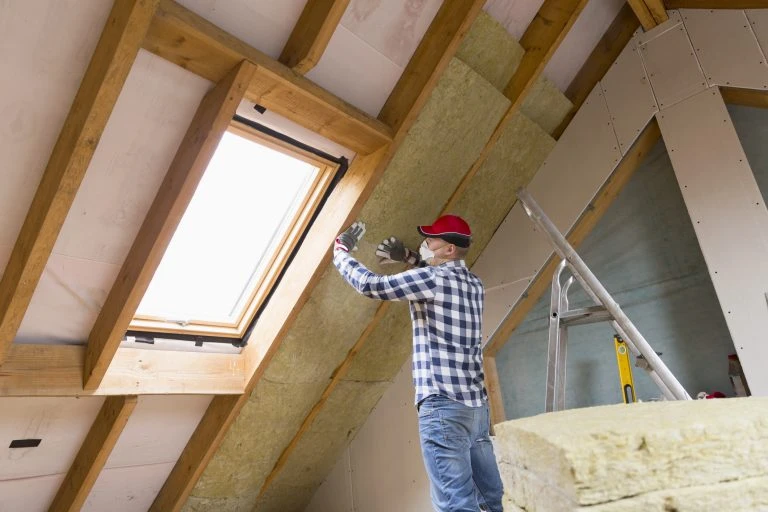
- Thermal Insulation: Adding high-density insulation to outside walls can cut down on the need for heating by up to 45%.
- Airtightness: Sealing drafts keeps warm air from escaping through crevices, which saves money.
- Triple Glazing: Today’s windows do more than just let in light; they also keep the cold out and the noise in.
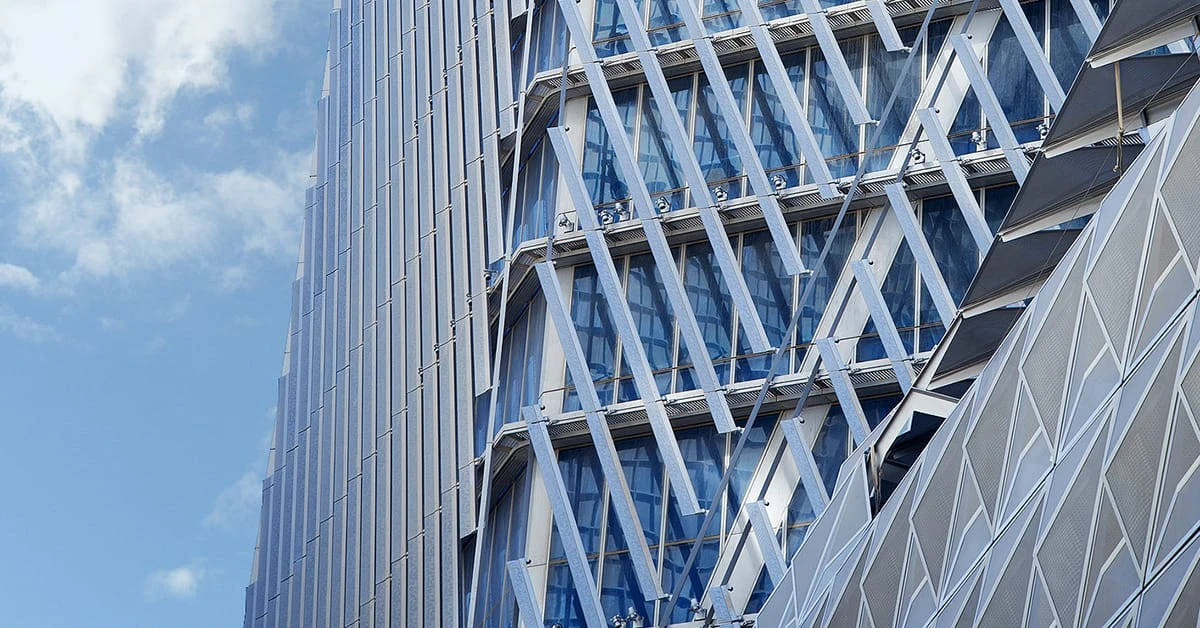
Electric heating (no more gas)
Taking out the gas boiler is one of the most emotional yet useful changes in European houses. Heat pumps, whether they come from the air or the earth, are becoming the new standard. They take heat from the outside air, even when it’s freezing, and use it to warm your flooring and water.
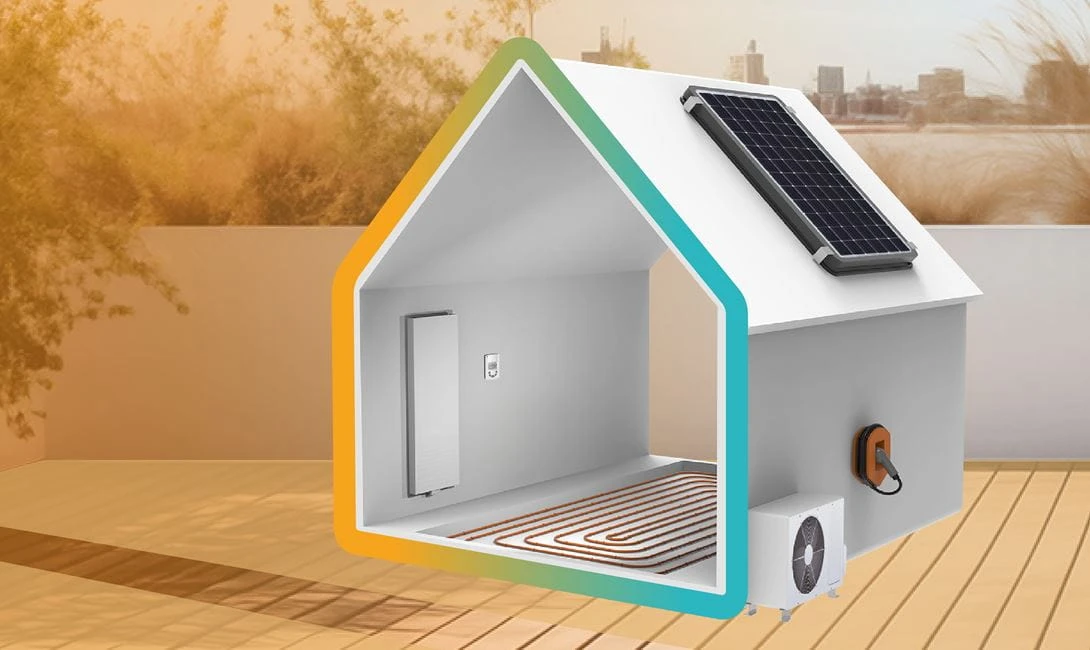
Smart Systems and Getting Back Heat
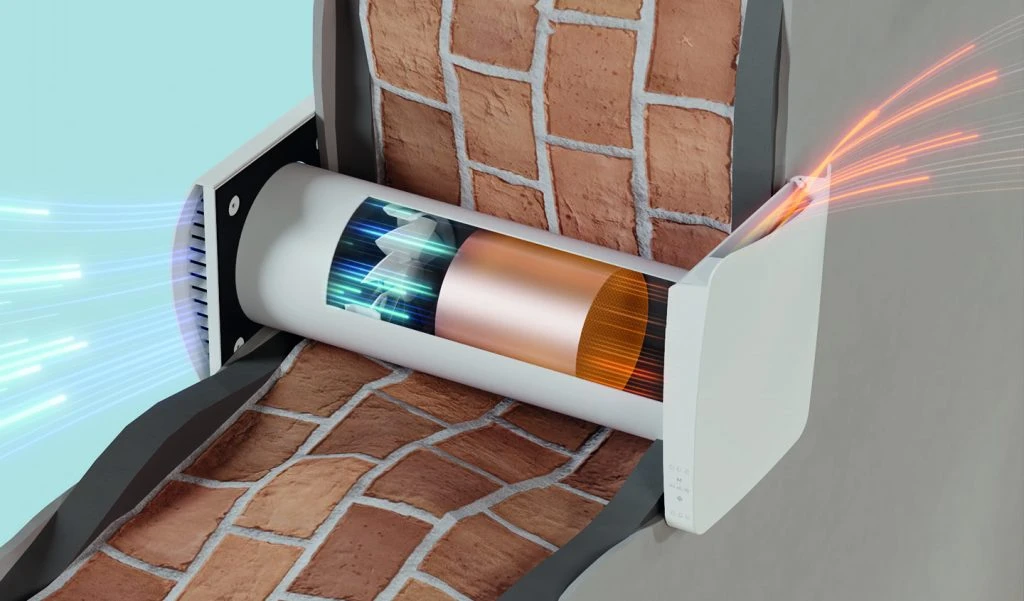
Mechanical Ventilation with Heat Recovery (MVHR) is one of the things that may be added to a modern building. These systems keep the air in your home fresh and purified all the time, and they also “recycle” the heat from the air that is being let out. It means you can get fresh air in the middle of winter without having to open a window and let heat go.
Why now? The “Renovation Wave” and New Rules
The timing isn’t a coincidence. The European Union just changed the Energy Performance of Buildings Directive (EPBD). All new structures must not produce any emissions by 2030, and all existing homes must fulfill severe new energy criteria.
It’s not just about the planet; it’s also about energy security. Retrofitting is the best way to protect yourself from “fuel poverty” when gas prices go up and down. A net-zero home is a home that is easy to forecast, and utility bills are far lower than they used to be.
The Human Impact: More Than Just Carbon
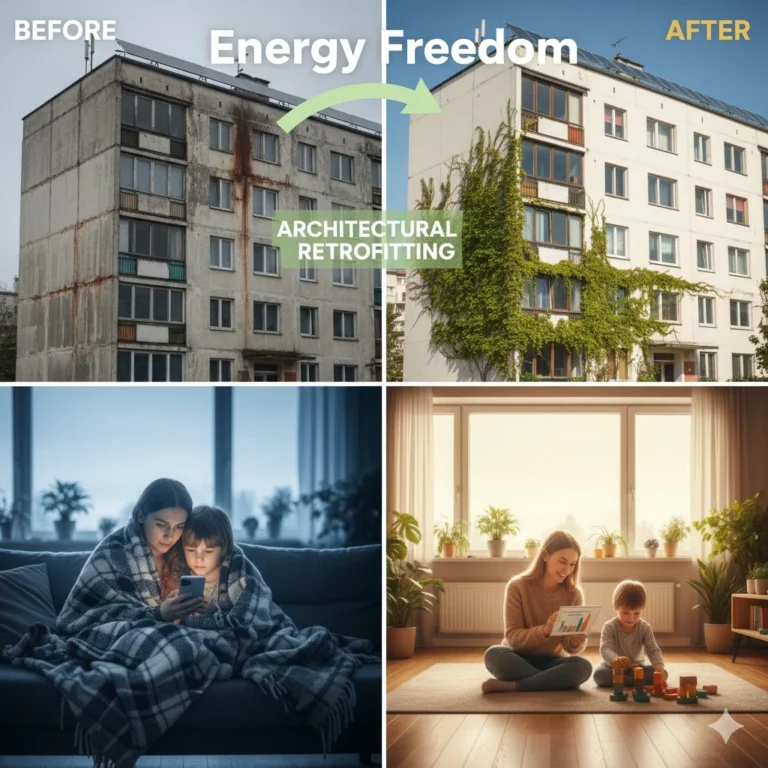
The technical specs are great, but the real magic is in how it improves quality of life. People who live in remodeled apartments often say that it feels like “living in a different building entirely.”
- Amazing Comfort: No more cold patches by the windows or moist corners where mildew blooms. The temperature stays the same all year.
- Better air: Advanced ventilation gets rid of CO2, allergies, and pollutants, which is very important in cities with a lot of people.
- Quiet Sanctuaries: The triple glazing and high-level insulation have an unexpected benefit: they keep the noise down. The noise of cars in the city goes away.
The Financial Reality: Is it Worth the Money?
The major problem is the cost up front. It might be pricey to do a lot of work on an apartment. But there are a number of things that are making the “business case” stronger than ever:
- Higher Asset Value: Homes with high Energy Performance Certificates (EPC) now sell for more money in the real estate market.
- Subsidies and subsidies: Homeowners can get low-interest loans and direct subsidies from programs like the Social Housing Decarbonization Fund or national “One-Stop-Shops.”
- Future-Proofing: Buildings that aren’t energy-efficient will get a “brown discount” when carbon prices go up, making them tougher to sell or rent.
Overcoming the Challenges
It can be hard to retrofit a building that is 100 years old.
- Historical Preservation: Many European buildings are protected as part of historical preservation. In these situations, architects use “heritage-style” high-performance windows and interior insulation to keep the building’s essence while making it work better.
- The “Split Incentive”: Sometimes landlords don’t want to pay for improvements because the renter will save money on the bills. New “Green Leases” are helping to fill this gap by giving both sides the benefits.
The Future: Retrofitting in an Industrial Way
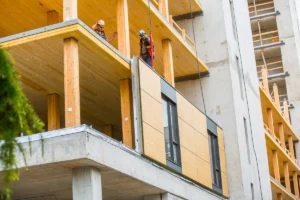
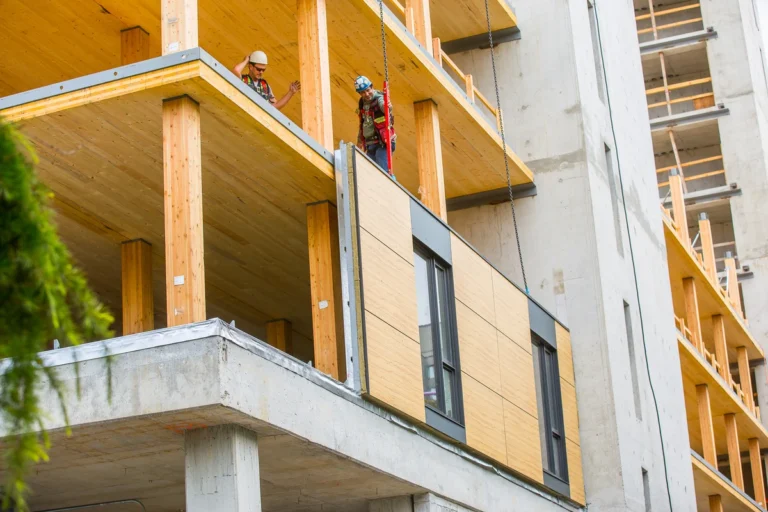
Europe needs to fix up millions of homes every year to reach its climate targets. We can’t achieve this with only one brick at a time. Energiesprong is a new idea from the Netherlands in which firms make “prefabricated” thermal skins for whole buildings. These panels can be put in place in only a few days, which means less trouble for residents and lower costs thanks to mass production.
Are you ready to change the way you live? Your home’s future is net-zero.
Net-Zero Retrofitting: A Quick FAQ
Q: Is it possible for an apartment from the 1800s to attain net-zero?
A: Yes! Deep insulation, heat pumps, and off-site renewables can bring even older buildings very close to or all the way to net-zero status, even if it’s harder than building a new one.
Q: How long does it take to execute a deep retrofit?
A: Traditional methods can take 3 to 6 months, but “pre-fab” solutions that are made in factories can often be put together in only a few weeks.
Q: What do you do first?
A: Always do an Energy Audit first. Before you buy any tools, a specialist will utilize thermal imaging to find out exactly where your home is wasting energy.
Final Thoughts: Rescuing the Past for the Future
NET-zero retrofitting is an act of love for our cities that will help them in the future. It lets us maintain the beautiful buildings of the past while still using new technology. We’re not only reaching a carbon target by changing these old buildings. We’re also saving our homes and making them healthier, cheaper, and stronger for generations to come.
For more blogs like this CLICK HERE!!
Reference:
Retrofitting can modernize buildings for long-term resilience | World Economic Forum