
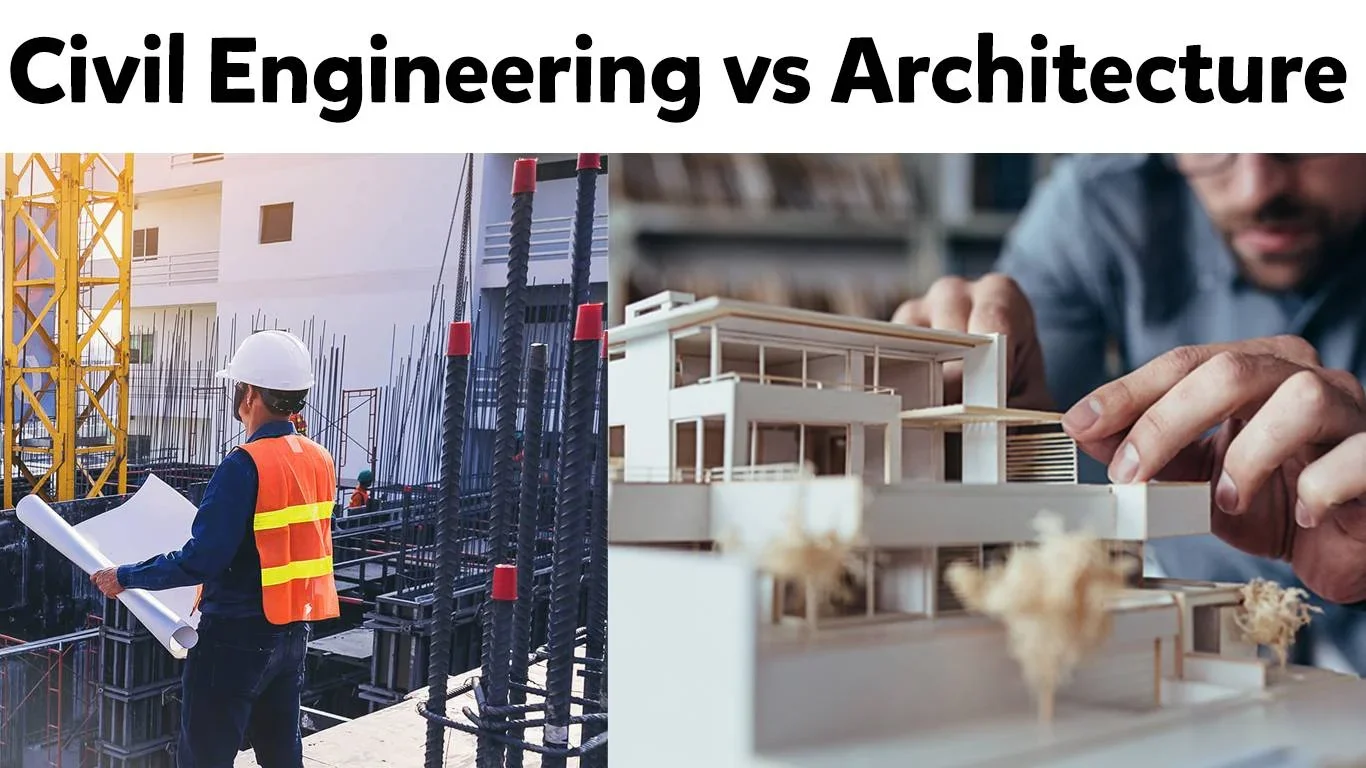
One of the most thrilling and sometimes scary choices you’ll ever make is what job to choose that will change the world around you. If you like the built environment, like the tall buildings, the useful infrastructure, and the places that make up modern living, you usually have two strong choices: architecture and civil engineering.
You might be interested in the physics that make it possible for a bridge to cross a huge gorge, or you might adore the notion of constructing a beautiful museum. These jobs are related to each other, yet they are very distinct in terms of their goals, how they work, and the way you need to think about them. This article is meant to help you figure out which heroic path is best for you based on your interests, skills, and future objectives.
The Architect’s Canvas: Imagination, Beauty, and Experience
If you see a structure and right away start to break down how it flows, how it lets in light, and how it affects people, you have the eye of an architect. Architecture is the art and science of designing spaces in a way that makes them seem good and work well.
What Is the Architect’s Job?
The architect is the main person who comes up with ideas for a project. Their main job is to turn a client’s demands and desires into a real, beautiful, and usable place.
- Core Focus: The main things to think about are how the building looks, how the space is organized, how easy it is to use, how it affects the environment, and whether it follows zoning rules.
- The Design Process: Architects are in charge of the schematic design, which is the process of deciding how a building will appear and feel. They choose materials depending on how they look and how well they work, create layouts, and handle the whole connection with the client.
- The Learning Path: The conventional route is longer and usually needs a Bachelor of Architecture (B.Arch) or a Master of Architecture (M.Arch) degree. After that, there is a tough, multi-year internship and the Architect Registration Examination (ARE). You need a license to use the term “Architect” and stamp official plans.

The Engineer’s Foundation: Structure, Safety, and Science
If you look at that same bridge and ask how the cables can handle all that stress or what geological pressures the foundation has to deal with, you are thinking like a civil engineer. Civil engineering is the study of how to make buildings safe, long-lasting, and built in a way that works well.
What Does the Civil Engineer Do?
The Civil Engineer is the one that solves problems and makes sure everyone is safe. They have to make sure that the architect’s creative vision can be realized within the unchanging constraints of physics.
- Core Focus: The main things to focus on are structural integrity, geotechnical stability, water management, transportation systems, material science, and cost-effectiveness.
- The Execution Process: Civil engineers, who frequently work as structural engineers, figure out how much weight beams and columns can hold, design foundations, and oversee infrastructure projects like highways, dams, and utilities. They hold the structure up and make it work.
- The Educational Journey: The process to become an engineer usually involves getting a four-year Bachelor of Science in Civil Engineering (BSCE) degree, which is mostly about math, physics, and courses in structural analysis. You need a degree to get an entry-level position, but to go up in your career and sign off on public projects, you need to get the Professional Engineer (PE) license.

The Important Divide: Working Together and Everyday Life
Both vocations are important for construction, but their daily lives and main skills are very different.
| Factor | Architecture (The Vision) | Civil Engineering (The Validation) |
| Primary Driver | Creative design and client aesthetic requirements. | Technical problem-solving and regulatory compliance. |
| Key Skill Set | 3D Visualization, artistic talent, history of design, client communication. | Calculus, physics, analytical modeling, materials testing, site management. |
| Work Environment | Predominantly office/studio time collaborating on conceptual design; limited site visits. | Equal mix of office design/analysis and essential fieldwork/site supervision. |
| The Core Question | What is the best possible arrangement of space and form? | Is this arrangement structurally sound, safe, and efficient? |
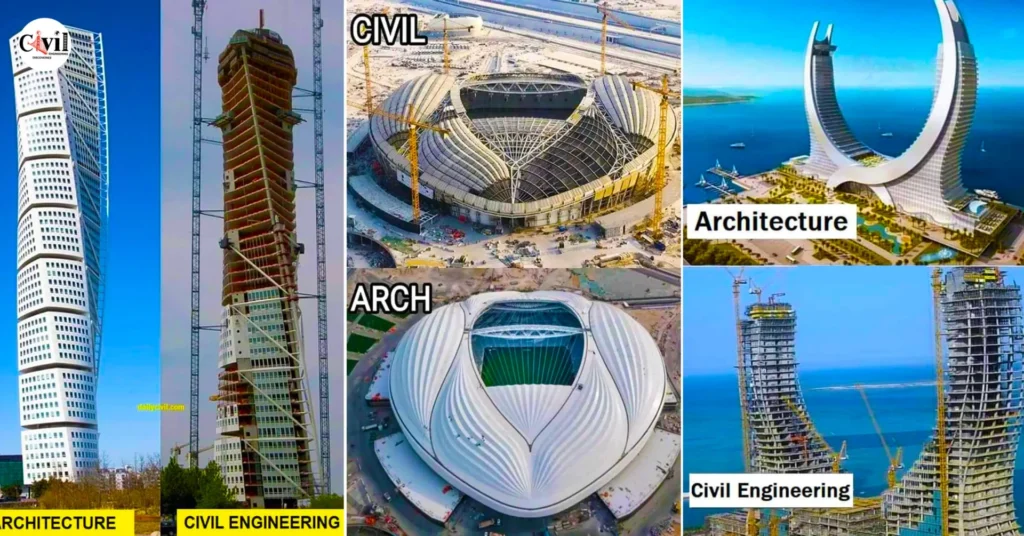
The architect starts the design by setting the big picture. After then, the engineer uses strict scientific analysis to make sure the idea doesn’t fall apart, leak, or go over budget. Their partnership, which is both harmonious and demanding, is what makes or breaks any big endeavor.
The Career Calculus: Pay and Future
For a lot of people, the long-term stability and financial feasibility of a career are the most important things. We may compare the future of both areas using recent statistics from sources like the U.S. Bureau of Labor Statistics (BLS):
| Career Metric (U.S. Data, May 2024) | Civil Engineer | Architect |
| Median Annual Wage | $99,590 | $82,840 |
| Projected Job Growth (2024–2034) | 5% (Faster than average) | 5% (Faster than average) |
- The Financial Advantage: Civil engineering usually pays more at the start and in the middle of a career. People often say this is because stamping structural and infrastructure designs requires a lot of specialist technical expertise and comes with a lot of legal risk.
- The Stability Factor: Both fields are expected to grow at the same rate (5%), but Civil Engineering is expected to have more job openings each year because there is always a need for professionals to work on big infrastructure projects (roads, water systems, public works) that are less affected by short-term changes in the economy than private architectural commissions.
Choosing with Your Heart
You shouldn’t be thinking about which career is “better,” but which one is “better for you.”
Pick Architecture if:
You are motivated by art and self-expression. You love making beautiful, useful spaces that make others feel something and meet their requirements.
You love working on conceptual designs and talking to clients, and you’re willing to commit to a longer, more competitive path to licensing.

Pick Civil Engineering if:
You really like math, physics, and figuring things out analytically. You are happy when you find the safe, useful, and quick way to solve a technical problem.
You like working on big infrastructure projects like bridges, tunnels, and public works, and you value the stability and clear career path that comes with being a technical specialist.
Architects and civil engineers are both builders of society in the present day. One person imagines the beautiful building, and the other makes sure the idea comes true. Take a good look at your greatest interests, whether they are creative or analytical. That is where your strong, satisfying career really starts.
For more blogs like this CLICK HERE!!
Reference:
Civil Engineering vs. Architecture: Key Differences and Career Paths – Civil Tutorials