
The Concrete Jungle is Taking a Break
The skyscraper, with its jagged steel and glass skyline that was meant to dominate the clouds, was the ultimate expression of human ego for more than a hundred years. But the story is changing as we get closer to the middle of the 2020s. We don’t construct to “conquer” nature anymore; we build to reconnect with it.
The “Ultimate Future of Skyscrapers” isn’t only about going higher; it’s also about living in a way that is good for the environment. This movement isn’t just a style; it’s a love letter to our world. It’s an admission that our cities need to breathe and that our buildings need to give back more than they take. By 2050, urban populations are predicted to grow by 2.5 billion people. The sky is no longer the limit; it is the answer.

What does it mean to live in a sustainable way?
At its essence, sustainable vertical living means building high-density residential and commercial structures that look like natural ecosystems. These buildings are becoming regenerative hubs instead of “energy vampires” that suck up resources.
The modern skyscraper is changing into a “Vertical Forest.” These buildings don’t just sit on the ground; they have thousands of trees, shrubs, and plants growing on their sides. They work as huge air filters for our cities, which are getting more polluted all the time. This method changes the way we think about things from “doing no harm” to “actively healing the environment.”

Vertical Forests: The City’s Lungs
The Vertical Forest, or Bosco Verticale, is one of the most beautiful parts of this revolution. These buildings are literally alive, thanks to visionaries like Stefano Boeri. They act like a “living skin” for the metropolis.
- The Environmental Impact: A single vertical forest may absorb up to 30 tons of CO2 every year while also making new oxygen.
- The Urban Heat Island Effect: Traditional skyscrapers reflect heat, which makes cities up to 5°C hotter than the countryside. Green facades soak up sunlight, which cools the area around them and cuts down on the energy needed for air conditioning inside.
- Biodiversity Havens: These towers are safe places for birds, bees, and other insects to live. They help restore the balance of nature in “concrete deserts” and sustain local pollination cycles.

The “Mass Timber” Revolution: Using Wood to Build
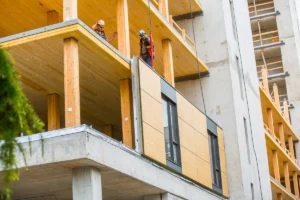
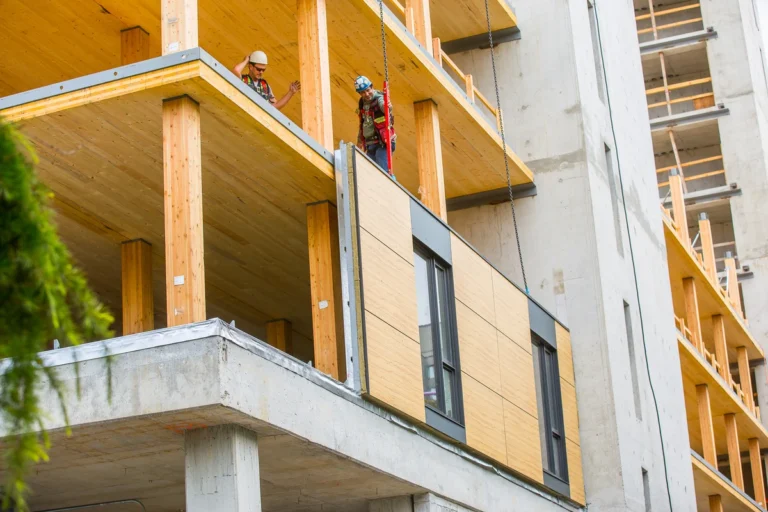
The material itself is a big change in the “Ultimate Future” of high-rises. We are going away from steel and concrete, which use a lot of carbon, and toward Mass Timber (Cross-Laminated Timber or CLT).
About 8% of the world’s CO2 emissions come from making concrete. Wood, on the other hand, holds carbon. We are basically making huge carbon vaults in the center of our cities by building “Plyscrapers.” With modern engineering, wooden buildings may now be taller than 25 stories. They have a warm, natural look that steel just can’t equal. Living in a building that feels like a forest is the most “sentimental” thing you can do.

Biophilic Design: Architecture with a Heart
Biophilia is the “heart” of the future skyscraper, while sustainability is the “brain.” Biophilic design is the concept of adding natural things like light, water, and plants to our homes to make us feel better.
The word “healing” makes me feel sentimental. New research shows that living in a biophilic environment can lower cortisol (stress) levels by as much as 30%. In the “Ultimate Future of Skyscrapers,” people won’t only look at a park; they’ll live in one.
Some important things about biophilic skyscrapers are:
- Circadian Lighting: Windows and smart glass that change with the natural light cycle to help you sleep and feel better.
- Sky-Courtyards are open-air places to hang out every ten floors that act as neighborhood “village greens,” bringing people together in a lonely digital age.
- Natural Ventilation: Using “stack effects” to bring in fresh air, which cuts down on the need for recycled air and “Sick Building Syndrome.”

Smart Tech: The Hidden Key to Sustainability
Writing a love letter to the planet takes more than just plants; it takes skill. Artificial Intelligence (AI) and Internet of Things (IoT) sensors power the “Ultimate” skyscraper of 2025 and beyond.
- Net-Zero Energy: Photovoltaic (solar) glass is taking the place of regular windows, making the whole building a huge solar panel.
- Water Recycling: Advanced greywater systems collect rainwater and shower water and use it to water the thousands of plants on the balconies, making a closed-loop system.
- Predictive Maintenance: AI keeps an eye on the health of every tree on the facade to make sure the “forest” grows without wasting any water.

Social Inclusion: Cities with Vertical Buildings, Not Just Towers
The “luxury penthouse” cliche is going away in the future of living in high-rise buildings. Architecture needs to be open to everyone in order to be really sustainable. Vertical Cities are becoming more popular. These are tall buildings that have cheap housing, schools, workplaces, and vertical farms all in one place.

The “15-Minute City” Goes Up
You could live on the 40th floor, work on the 20th, and get fresh organic fruits and vegetables from a vertical farm on the 5th without ever having a car. This cuts down on the carbon footprint of commuting and builds a strong sense of community that is sometimes lost in big cities. We keep the horizontal land around these services for parks and wildlife by stacking them.

The Financial Benefits of Green Skyscrapers
These buildings are “love letters” to the Earth, but they are also good investments. People like to live in healthy spaces, therefore “green buildings” frequently have higher rents and fewer empty units.
- Energy Savings: Sustainable towers can cut energy expenditures by 40 to 60%.
- The future of regulation: The Global Biodiversity Framework and other Carbon Tax measures will soon make non-sustainable buildings financial burdens (stranded assets).
- The Gen Z Market: Renters today care more about being eco-friendly. People prefer to live in a home that fits with their values, which is why green skyscrapers are the safest investments in real estate.

Case Study: Singapore’s Oasia Hotel
Singapore is now the best place in the world to build “biophilic skyscrapers.” The Oasia Hotel Downtown is a great example. The structure looks like a huge flower in the center of the business district. It is covered in red aluminum mesh that supports 21 types of creepers and vines. Not only does it house people, but it also cools off the whole area.

Conclusion: A Promise That Reaches the Sky
The future of skyscrapers is bright, green, and very human. We are making a promise to future generations by choosing Sustainable Vertical Living. It’s not simply about saving money on our electricity bills. We are teaching them that we found a way to live in peace with the Earth, even in our busiest cities.
Every vine that climbs a glass wall and every sky garden that has a family picnic is a modest win. One floor at a time, this is how we make the world better. It’s not about how high we can go anymore; it’s about how much life we can bring with us to the top.
For more blogs like this CLICK HERE!!
Reference: