

The Call to Timeless Majesty: Why Order Is Important
You can feel the weight of history right away whether you walk around Washington D.C. or across the historic campuses of America’s oldest colleges. It’s not simply how big the buildings are; they also give out a deep, almost spiritual serenity. This is what American Neoclassical architecture is all about.
This style has more to it than just adornment. It has clean lines, big columns, and perfect symmetry. It is a carefully planned visual plan for the American experiment itself. The Founding Fathers didn’t choose it just because it was popular; they chose it because it was the architectural language of reason, civic virtue, and democracy.
You are not only looking at marble and stone when you look at these buildings. You can literally see the ideas of the Enlightenment carved into the terrain of a new country.

The Enlightenment Blueprint: A New Republic
The Neoclassical movement started in the middle of the 18th century in Europe as a direct response to the busy, extravagant, and asymmetrical styles of Baroque and Rococo. People who lived during the Age of Enlightenment valued reason, logic, and order. They looked back thousands of years for ideas. They didn’t find it in the contemporary European royal families; they found it in the stable, logical communities of ancient Greece and Rome.
This rebirth had a huge political impact in the United States.
The United States had recently ousted a monarchy and needed a strong visual sign to show who it was now. What better place to look than the old republics and democracies? By using the styles of Athens and Rome in their buildings, builders like Thomas Jefferson were intentionally linking the American republic to the ideals and historical legitimacy of classical civilizations.
Jefferson may have been the style’s biggest supporter. He used ideas from the Roman Pantheon and the work of Italian architect Andrea Palladio to create his house, Monticello, and the University of Virginia Rotunda. His work started the American Federal Style and its later, more dramatic cousin, Greek Revival.
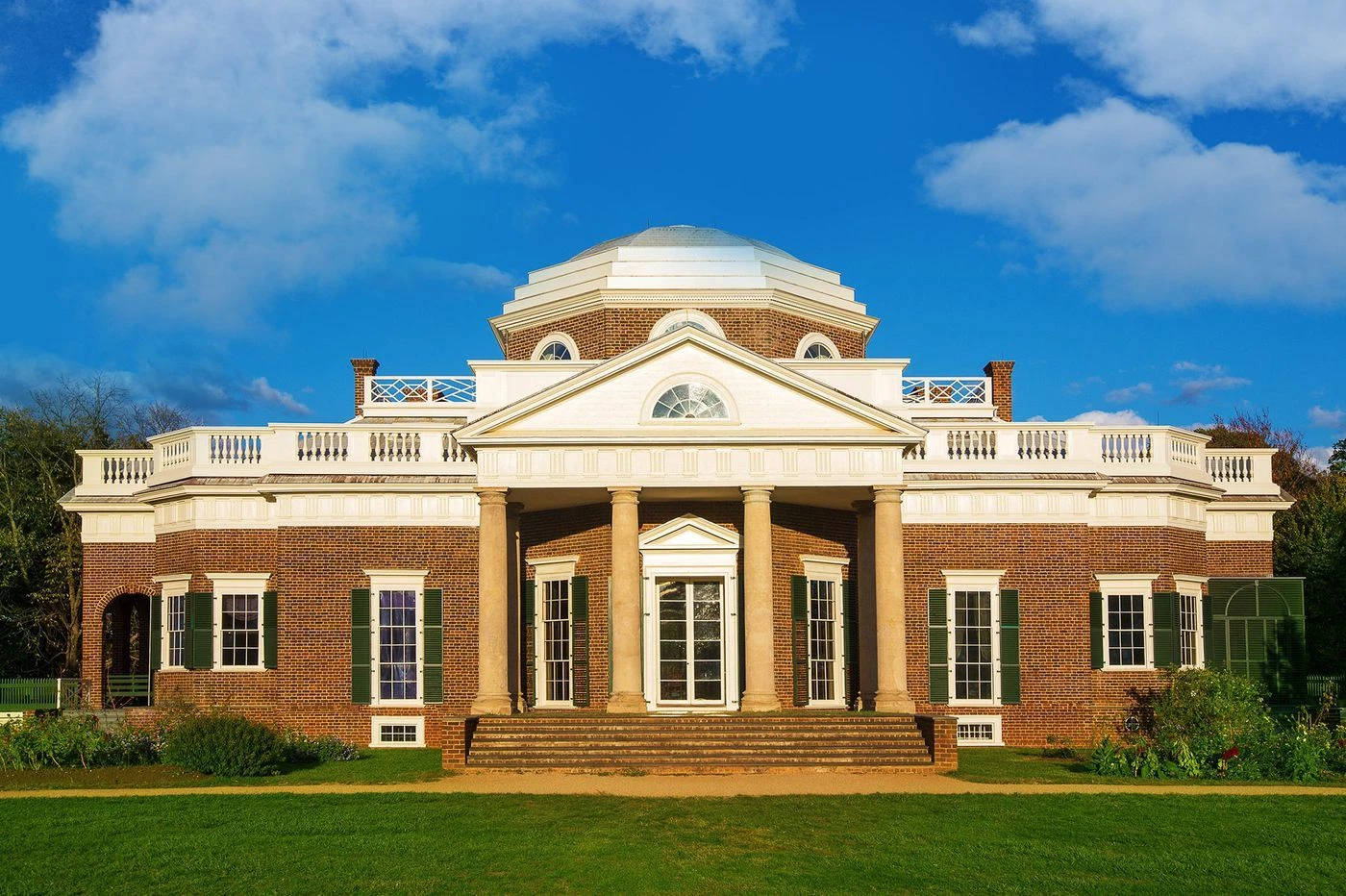
Understanding the Language of Geometry
What is it about this style that makes it seem authoritative and orderly? American Neoclassical architecture follows a rigid visual language that stresses simple beauty and quiet majesty.
Important Features:
Balance and Proportion:This is the most important part of Neoclassicism. Every building has a center axis, and on either side of it, windows, doors, and columns are exactly mirrored. This careful balance gives the building a sense of harmony and structure, which makes the spectator feel that it is stable and clear.
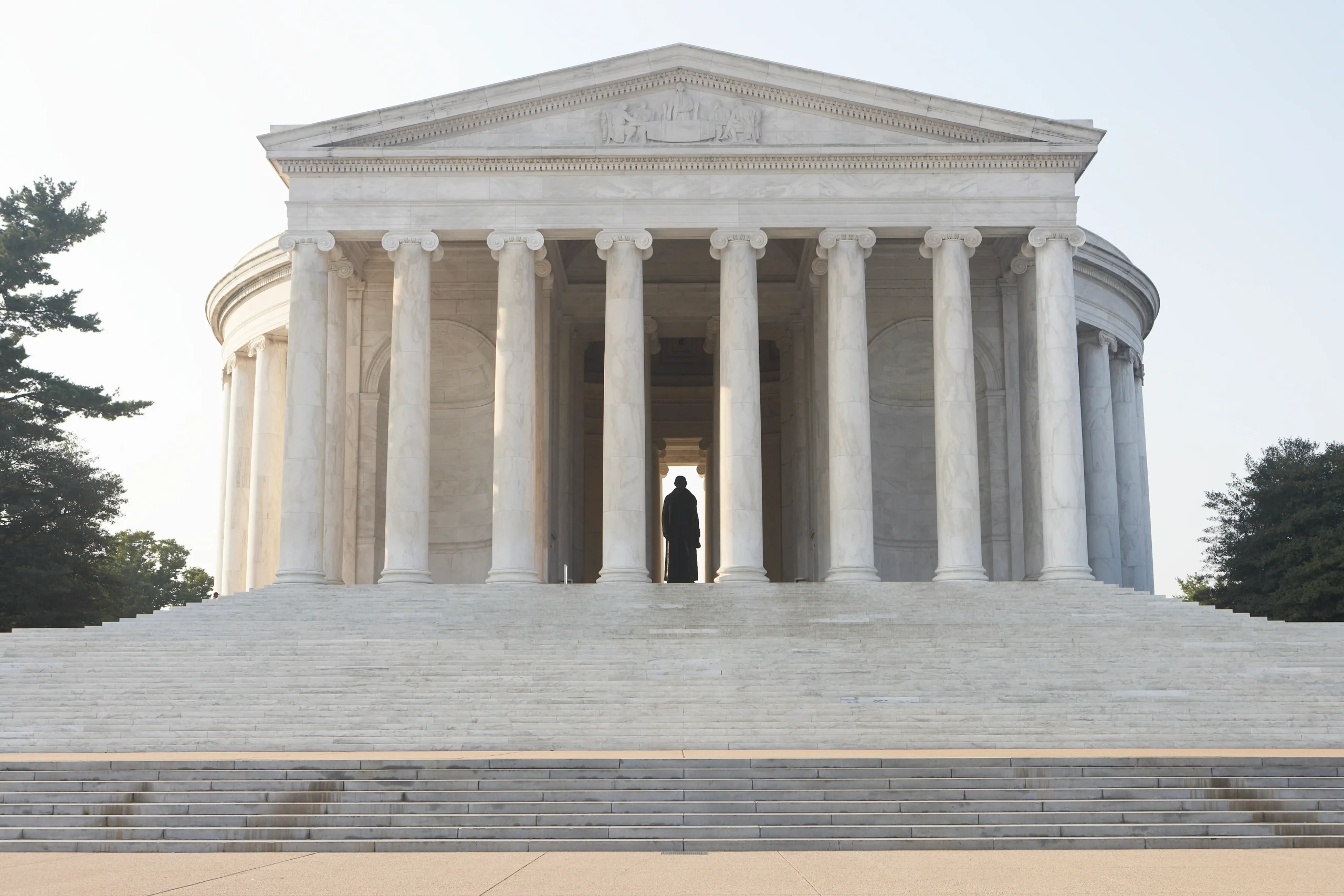
The Orders of the Classical Period: The column is the most well-known part. Porticos, which are huge entrance porches supported by rows of stately columns, are common in neoclassical structures.
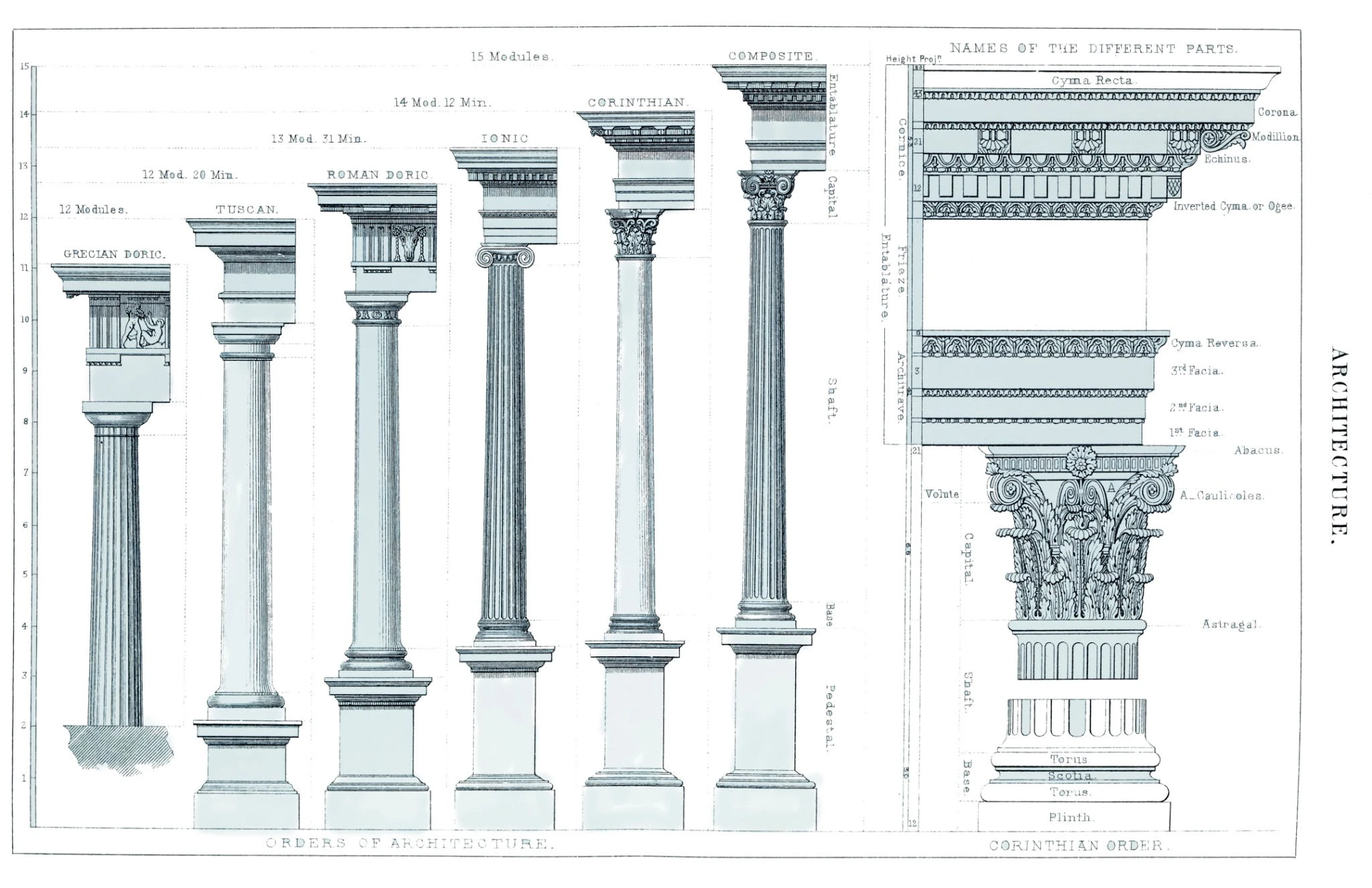
There are three main forms of these columns, called “Orders”: the plain and strong Doric, the graceful and scrolling Ionic, and the ornate and leafy Corinthian. It wasn’t random that they were used; it was a strong allusion to Greece and Rome’s political roots.
Pediments and domes The triangular gable above the main entrance is called a pediment. It is usually kept plain or decorated with relief sculptures that have meaning. The dome, which is a feature of Roman architecture (like the Pantheon), sits above the main part of the building. It represents global knowledge and power and has a sense of eternal majesty.

The Pillars of Democracy: Stone Symbolism
It was a very strategic choice to make Neoclassicism the style of choice for federal buildings in Washington, D.C. The architecture itself became a way to run the country and construct the nation.
The polished marble columns and plain walls were meant to provide a clear message to the public:
- Reason and Order: The Enlightenment believed in rational government and predictable law, which is why the design was simple and geometric.
- Civic morality: The nation’s dedication to republican morality and austerity was shown by the absence of lavish, silly decorations, which was a criticism of European royal houses.
- Enduring Strength: The use of huge sizes and long-lasting materials, such stone or marble, made it seem that the new political structure would exist forever.
The buildings were designed to look like they had been there forever, linking the young, unsure nation to the old, tried-and-true ideas of democracy and justice.
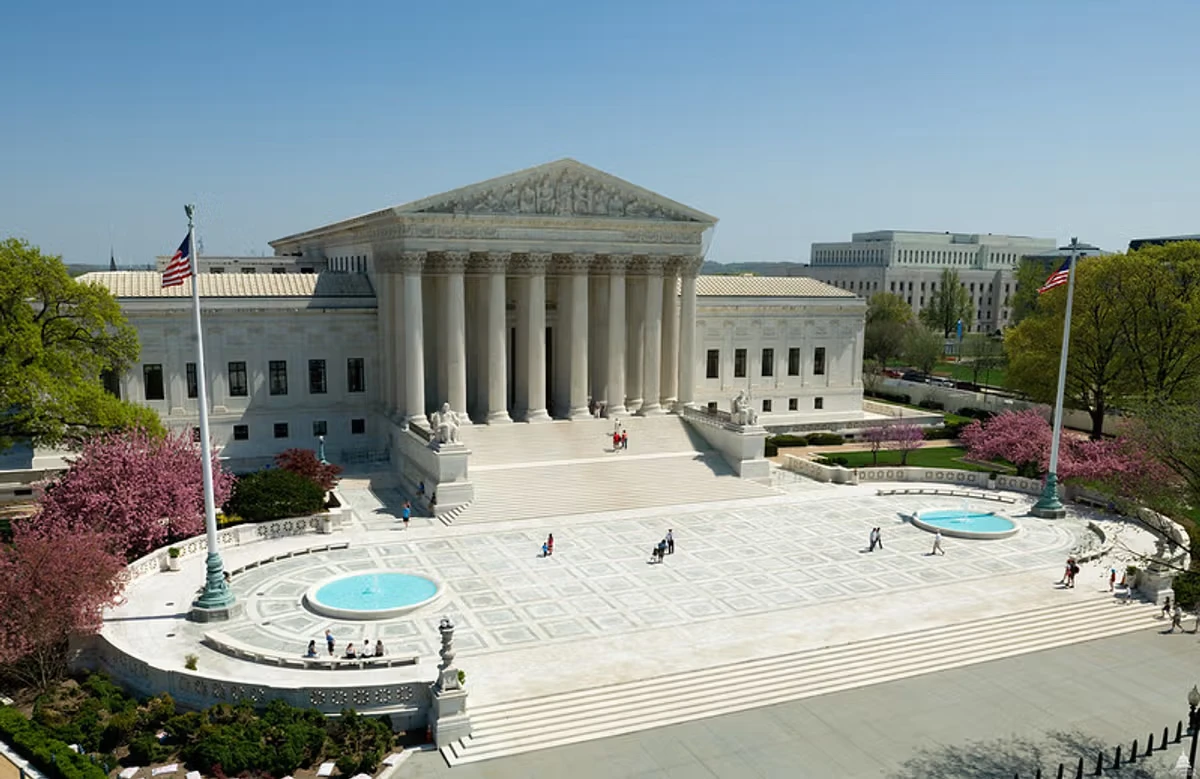
Washington D.C.’s Marble Heart: A Case Study
The best example of this idea is the capital city of the United States. The city was planned by Pierre Charles L’Enfant, and its layout is a traditional grid that stresses order and clarity.
The U.S. Capitol Building is probably the most famous example. The huge dome and majestic portico (where the Statue of Freedom sits) were made to stand out in the skyline. It is a real example of the people’s power to make laws.

The White House, which was designed by James Hoban, and the Jefferson Memorial, which is a near-perfect temple-front façade based on the Pantheon, also follow this idea. The Supreme Court Building is designed to seem like a Greek temple, which represents justice as a notion that can never change. These buildings are not only where the government works; they are also icons of American government.

The Soul That Lasts
American Neoclassicism set an enduring standard for civic dignity in places like the National Archives’ marbled halls and the great historic banks and courthouses that may be found in cities all around the country. It taught us that the places where our laws are established and our history is kept should stand for more than just one person or political movement.
The next time you see a structure with that austere facade, those tall columns, and that flawless symmetry, take a moment to think about what it really means. You are seeing more than just a gorgeous edifice; you are seeing the physical embodiment of the principles that founded this country—the soul of American democracy, constructed to last.
For more blogs like this CLICK HERE!!!
Reference:
Power and Pillars: How Washington D.C. Embodies American Ideals Through Architecture