There is a fleeting moment every “Christmas” when the world’s most famous landmarks shed their everyday skin. Cold stone, industrial steel, and modern glass are suddenly draped in millions of twinkling lights, evergreen garlands, and the quiet promise of holiday magic.
Across the globe, architecture isn’t just about shelter or design; during the holidays, it becomes a canvas for our shared traditions. Whether it’s the nostalgic glow of a Tudor mansion or the high-tech brilliance of a skyscraper, these iconic buildings transform cities into living storybooks. Let’s take a journey through the most enchanting structures that define the “magic” of Christmas.
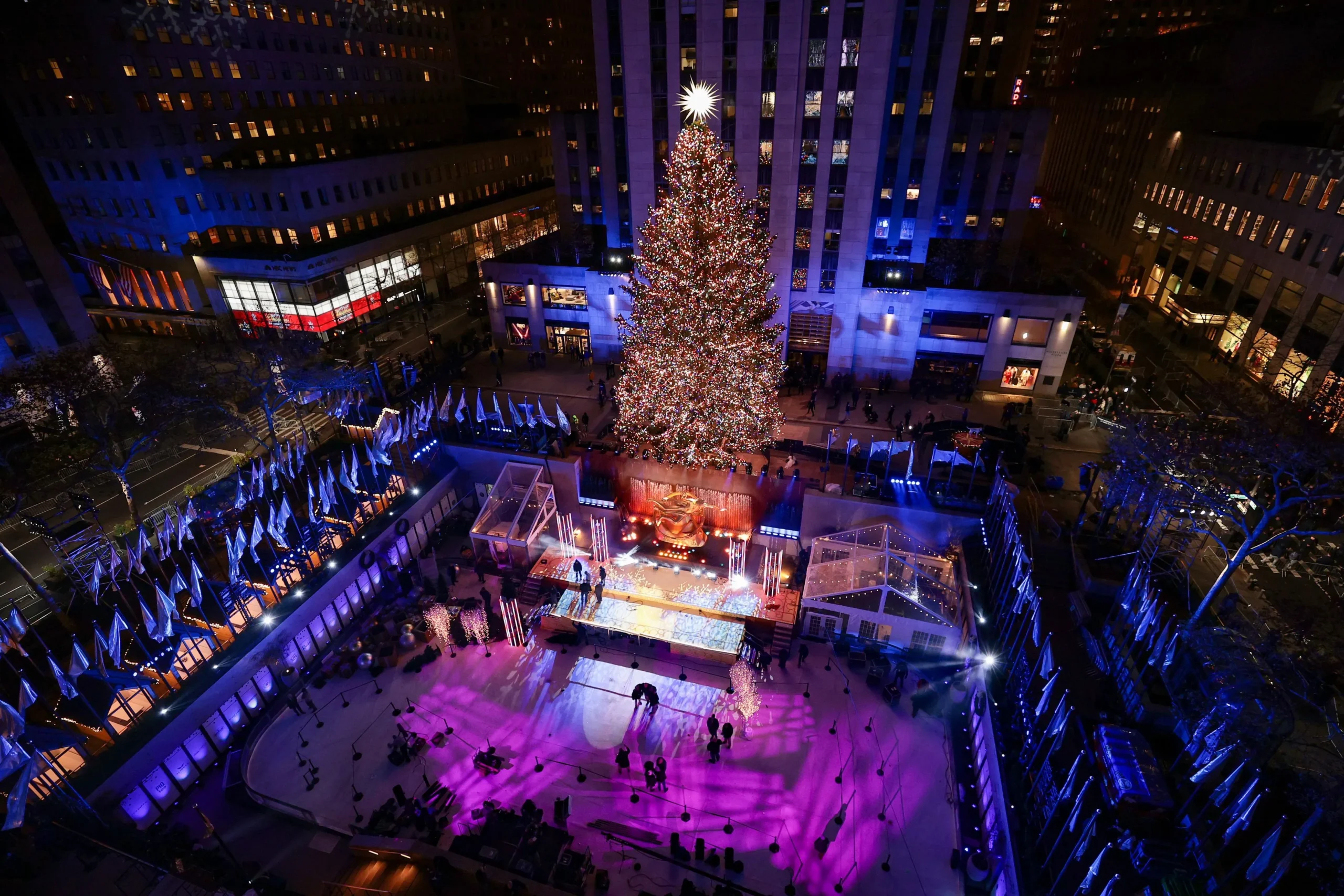
The Rockefeller Center in New York City
This is what people picture when they think of a “New York Christmas.” The 80-foot Norway Spruce is the main attraction, but the Art Deco background of 30 Rockefeller Plaza sets the mood. The golden statue of Prometheus and the flawlessly symmetrical channel gardens draw your eye to an edifice that looks like it wants to touch the stars.
The Magic Factor: The building’s golden lights reflect off the ice rink to generate a warm, amber glow that makes the “fast-paced chaos” of Manhattan appear like a quaint town for a moment.
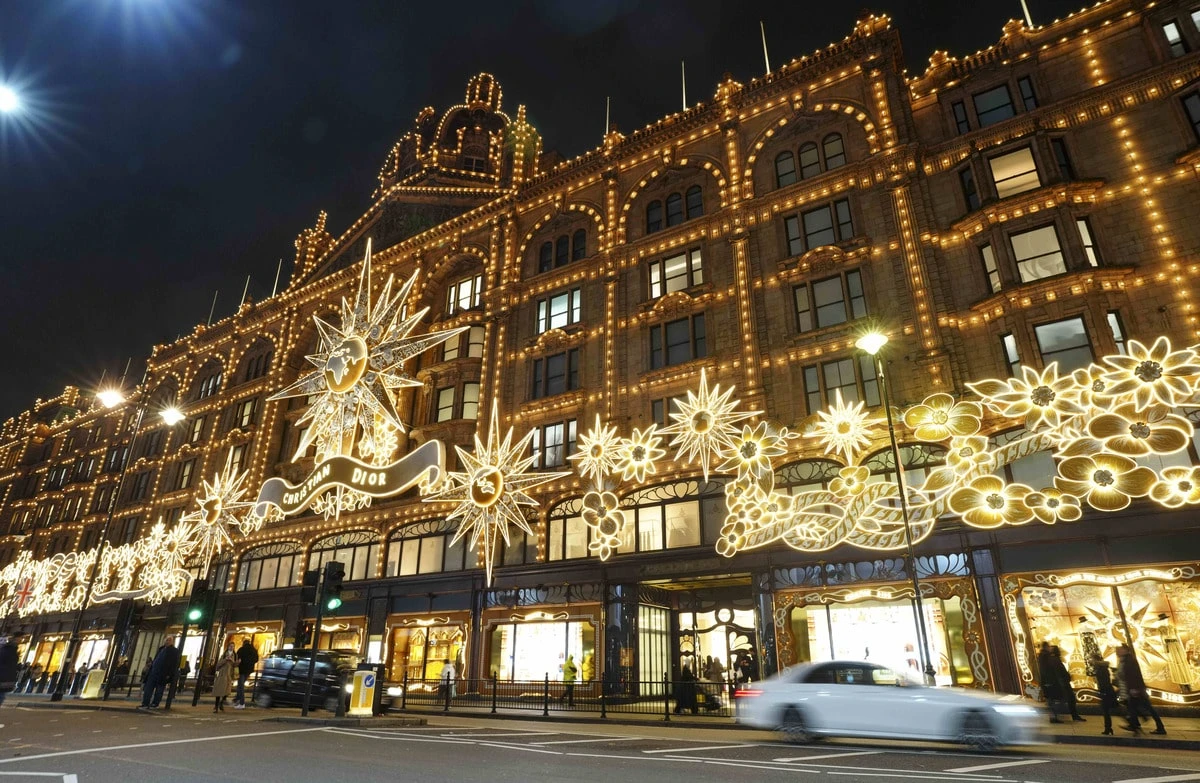
The Harrods Department Store in London
The holidays don’t fully start in London until the 12,000 light bulbs outlining Harrods’ terracotta facade turn on. This Edwardian work of art doesn’t just show off decorations; the structure itself turns into a huge, lighted present box.
The Sentimental Touch: For more than 100 years, families have made it a point to visit the Harrods Christmas windows. The building connects the luxury of today with the “Old World” elegance of Victorian London in a way that makes you feel nostalgic.
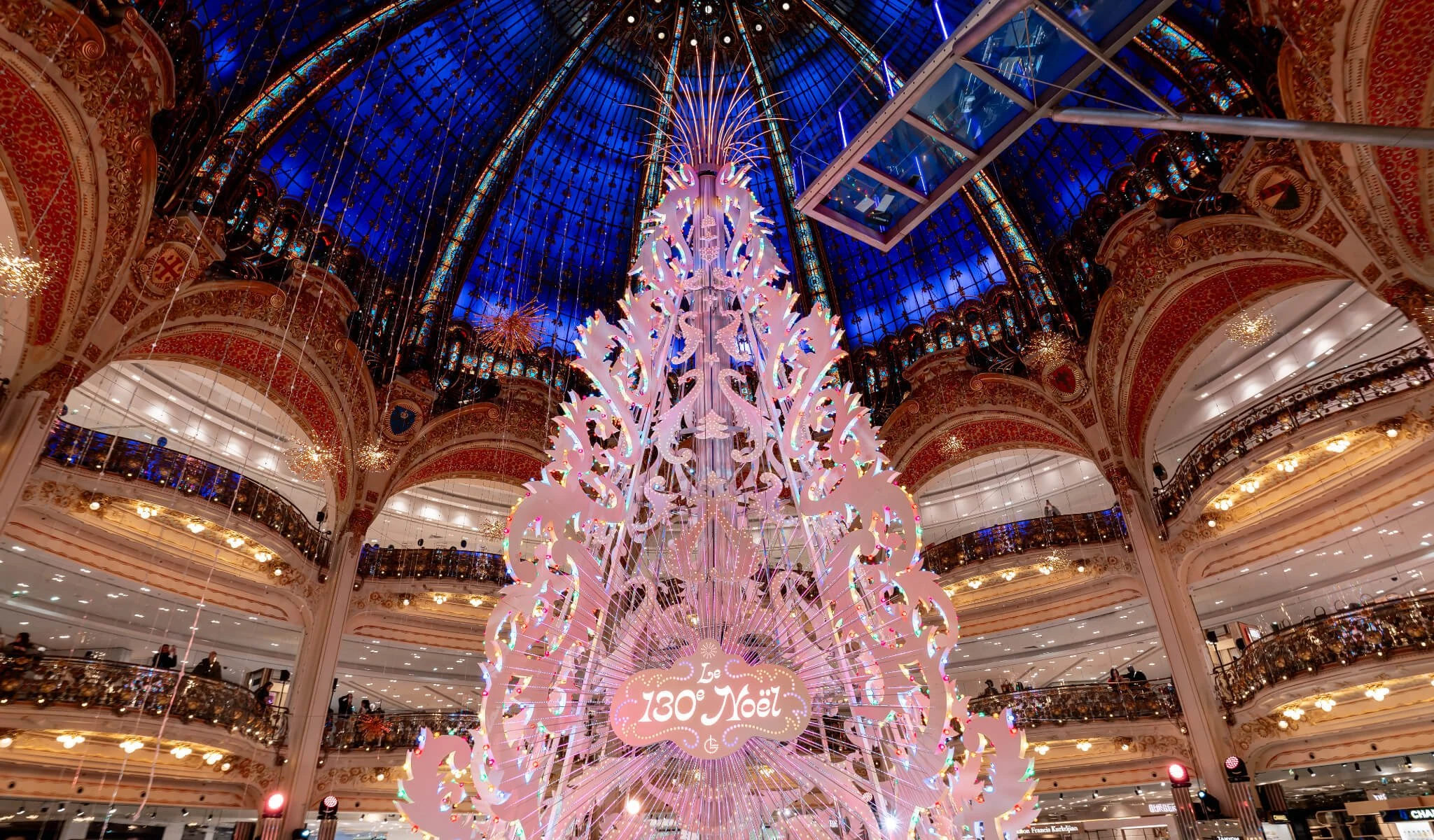
Paris’s Galeries Lafayette
Most buildings focus on the outside, but the Art Nouveau dome is what Galeries Lafayette in Paris is all about. Every year, a huge, themed Christmas tree hangs from the stained-glass roof, making the store look more like an opera house than a department store.
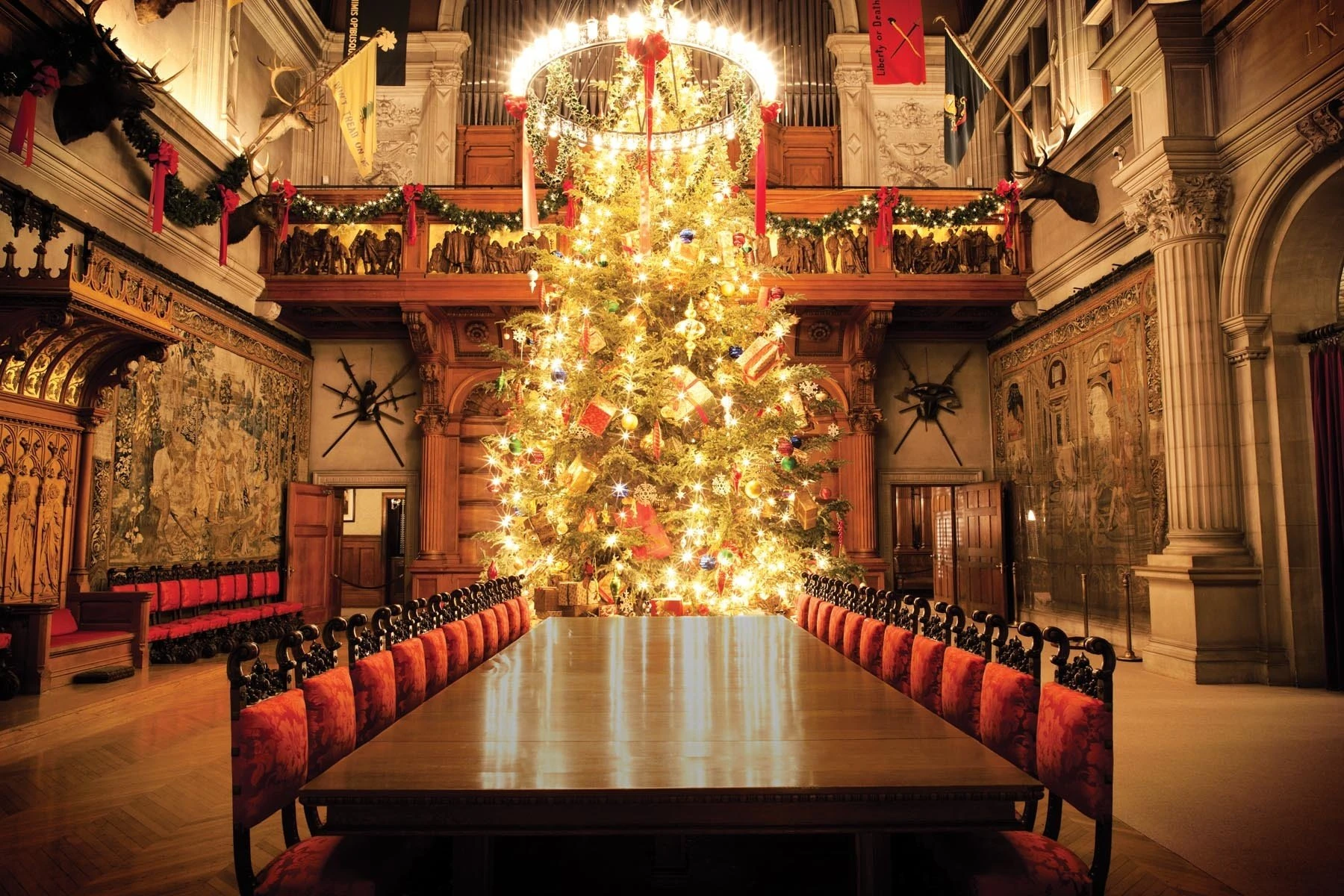
Biltmore Estate in North Carolina
The Biltmore in Asheville is the biggest privately owned home in the US. It has a “Gilded Age” Christmas that is unlike any other. The French Renaissance architecture feels warm and lived-in because there are 35 hand-decorated trees inside and miles of fresh evergreen boughs outside.
Why It’s Famous: The size of the limestone fireplace in the Banquet Hall, which is lit by soothing candlelight, makes it feel like “home” on a regal level.
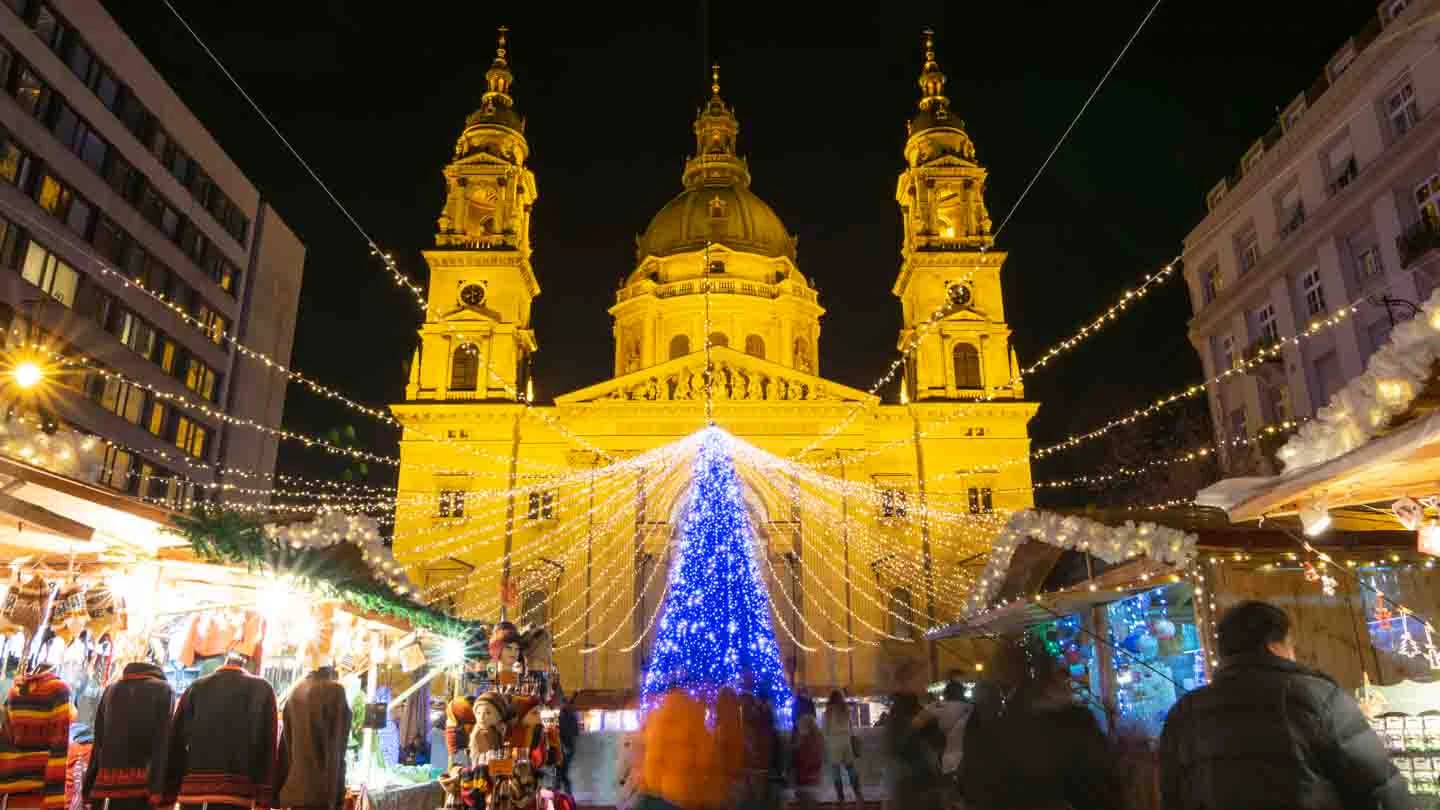
St. Stephen’s Basilica in Budapes
The Basilica is the most attractive part of Budapest’s Christmas market, which is one of the best in Europe. The history of 3D light mapping continues in 2025. Stories about the holidays are projected directly onto the neoclassical facade of the cathedral, making the stone look like it’s moving and dancing.
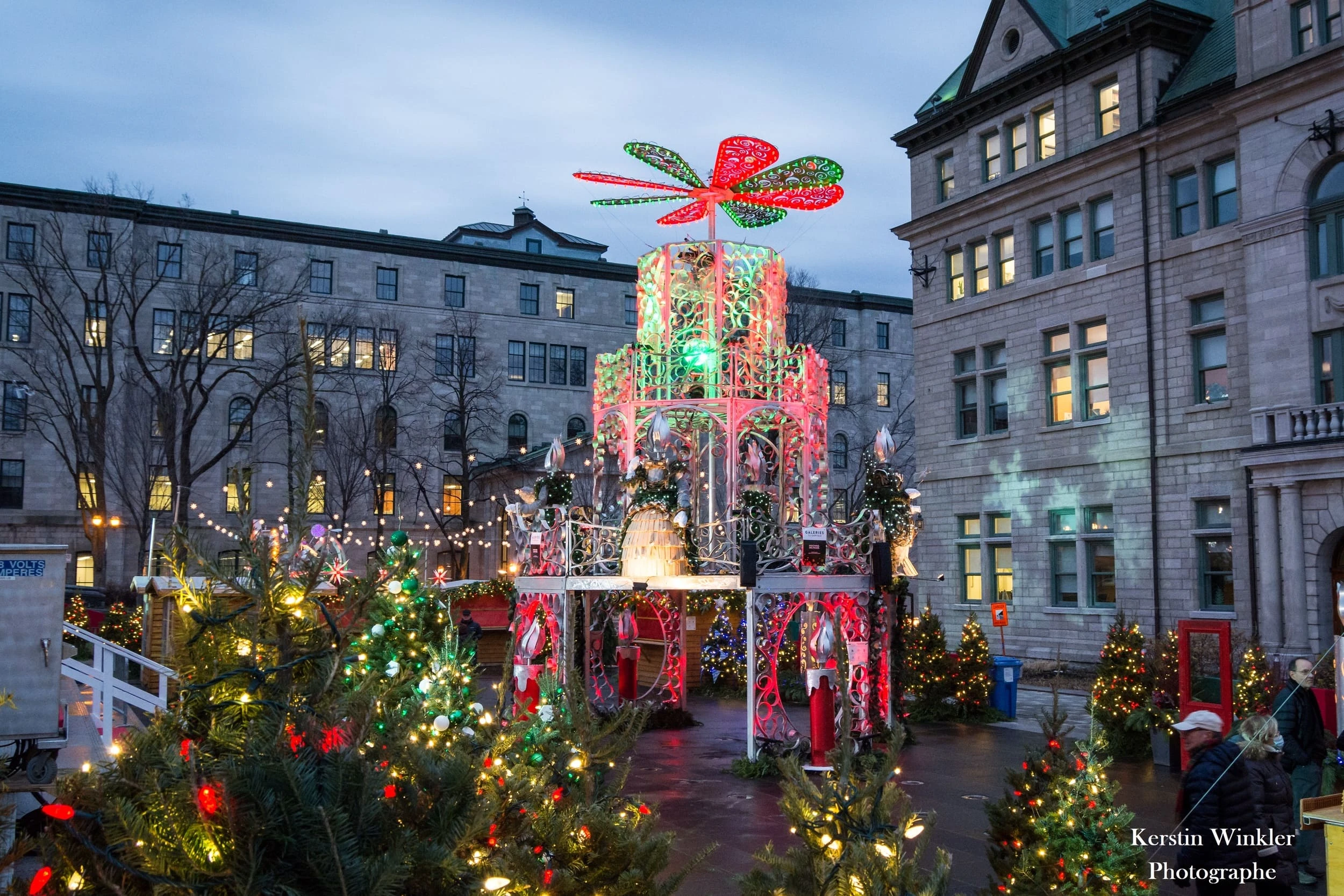
The Fairmont Le Château Frontenac in Quebec City
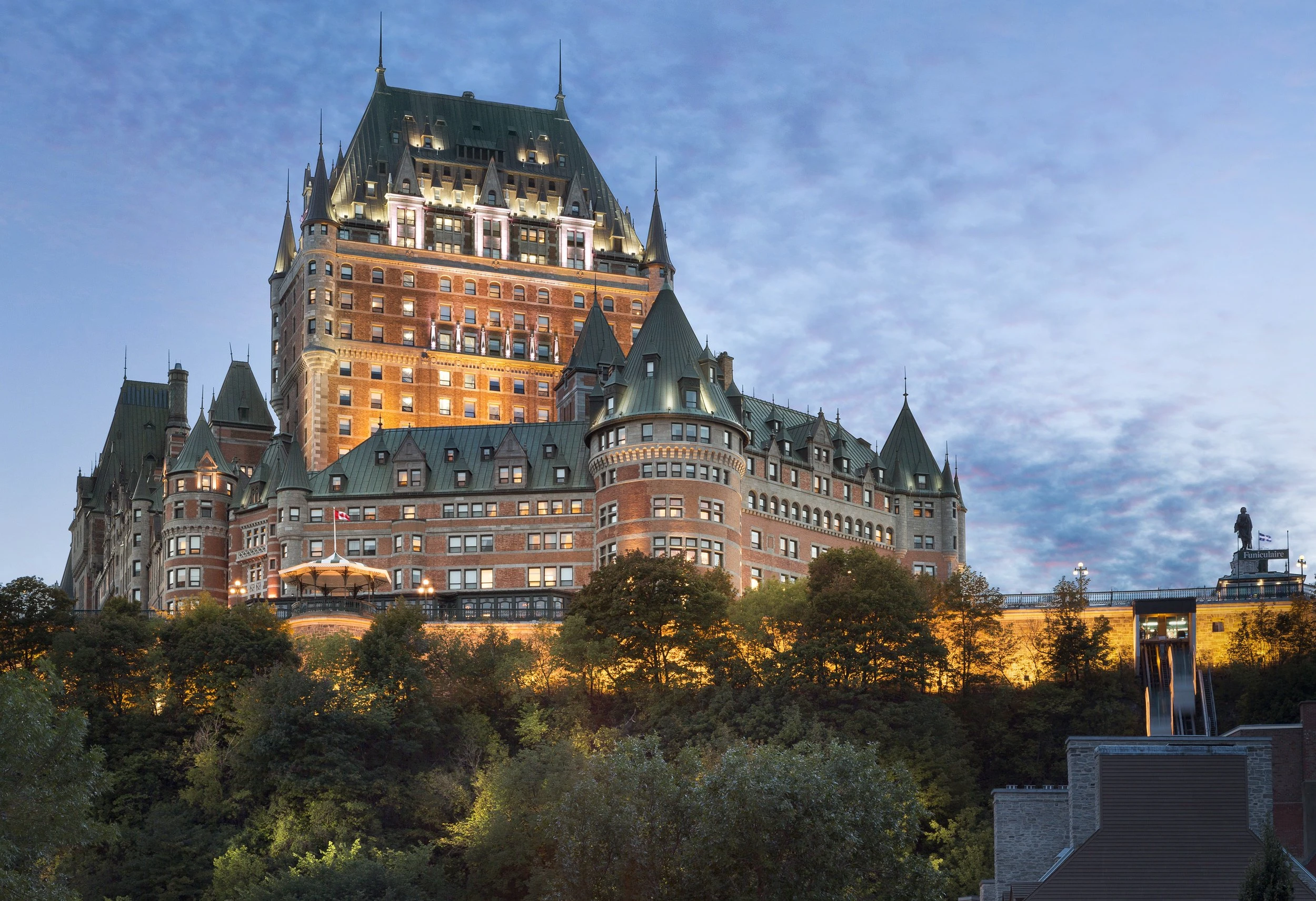
This hotel is probably the most photographed edifice in Canada. It stands high above the St. Lawrence River. It looks like it sprang right out of a Disney movie because of its castle-like towers and copper roof, which is sometimes covered with actual snow by mid-December.
The Vibe: It has that hard-to-find “European” atmosphere in North America, with cobblestone streets, flickering lanterns, and a stronghold of seasonal happiness.
Vatican City: St. Peter’s Basilica
For a lot of people, the holidays represent a time of spiritual growth. The huge St. Peter’s Square is home to a life-sized Nativity scene and a huge tree that is usually a gift from another European country each year. The square is centered by the great Basilica from the Renaissance.
The Magic Factor: The architecture is huge, and the white lights are simple, which makes for a calm, tranquil beauty that stands out from the usual Christmas commotion.
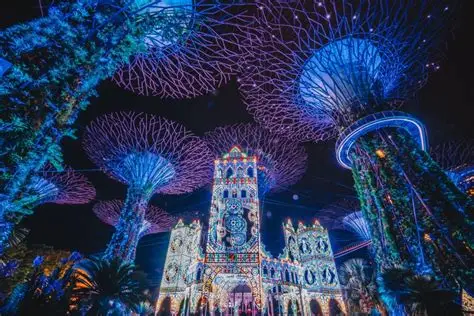
Gardens by the Bay in Singapore
The Supertrees in Singapore show that you don’t need snow to make Christmas magical. They give the holiday a futuristic twist. During the Garden Rhapsody light show, high-tech LEDs wrap around these 50-meter tall vertical gardens and “dance” to songs.
Düsseldorf’s Schloss Benrath
Picture a Rococo palace in pastel pink with a frozen lake and a “hidden” Christmas market around it. This German work of art is the best example of romantic architecture. The gentle pink walls, white snow, and golden market lights make a “dreamlike” color scheme.

The White House in Washington, D.C.
The First Lady picks a theme for the “People’s House” every year. The inside is a tangle of decorations, but the outside, with its simple, elegant white lights and huge wreaths, is still a sign of legacy and national tradition.

What Makes a Building “Magical”?
Not just the quantity of lights. Architects and designers say that the magic derives from three things:
- Symmetry: We are naturally drawn to skyscrapers like Harrods or the Empire State Building because their lighting is symmetrical, which makes them seem “ordered” and calm.
- Warmth vs. chilly: When warm yellow or amber lights are against a chilly blue winter sky or white snow, it makes people feel like they are at home.
- Scale: Seeing a huge monument like the Eiffel Tower or the Sagrada Família decorated tells us that the Christmas spirit is bigger than our everyday life.
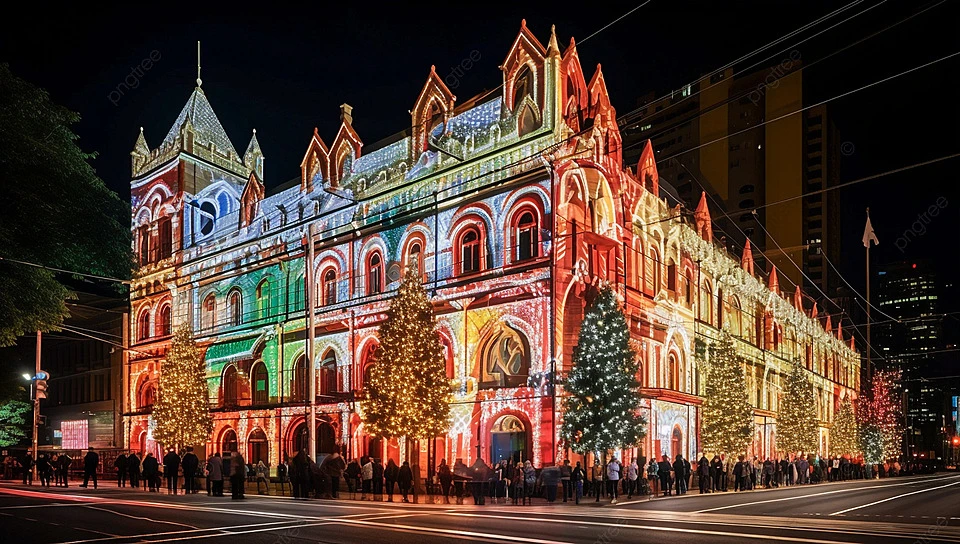
Your List of Holiday Architecture to See
The way we celebrate via architecture is changing as we approach into 2026. We see more LED displays and interactive projections that are good for the environment, but the basic feeling is still the same. These buildings are more than simply stone and mortar; they are the memories that stand out in our minds.
Which of these enchanted buildings would you like to see in person? There is a “forever memory” waiting for you under those lights, whether you choose to see the cold streets of Quebec or the neon pulse of NYC.
For more blogs like this CLICK HERE!!
Reference:
40 of the Most Beautiful Places in the World at Christmastime