The Beginning of a Real American Ideal
Have you ever seen a house that looks like it melts into the ground and fits in with the landscape? Prairie Style Architecture, a revolutionary design movement that started in the American Midwest around the turn of the 20th century, gives you that impression. Frank Lloyd Wright was the most important person in this architectural movement.
Wright was keen to build a house that was truly American. He wanted to get rid of the fussy, segmented Victorian forms and the European traditions that were popular at the time. He looked out across the wide, flat Midwestern plains and said,
“Democracy needed something better than the box.”
The wonderful secret of the Prairie Style is that it’s not just about bricks and beams; it’s about a sincerely held belief. It’s the belief that a building should be a natural part of its surroundings, encouraging peace, a connection to nature, and a real, casual American way of life. This was the basis of the Prairie School, a group of Chicago-based architects that supported this new way of thinking.
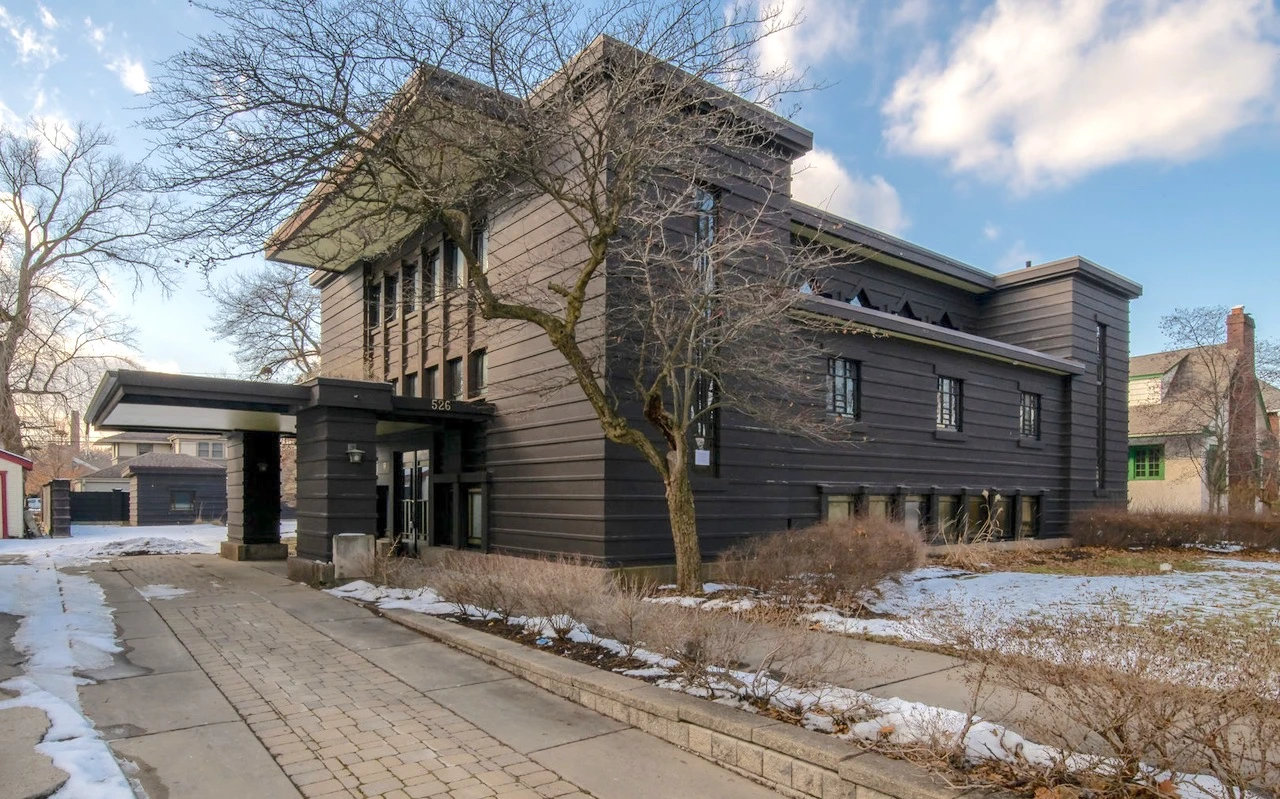
The Idea: Organic Architecture and the Prairie
Wright called his main idea “Organic Architecture.” It means that the building should look like it belongs there and that it grew naturally from the land. He did this by purposely connecting the home to the ground. He celebrated the horizontal lines of the vast plains instead of trying to make it look like a European cathedral or skyscraper.
The style gave a completely different way of looking at home life. Wright didn’t want distinct, isolated chambers; he wanted movement and space. He knew that buildings may affect people’s health by making them feel calm and stable. The way that authentic American architecture connected to the soil and used natural materials became a defining feature.
The iconic Robie House in Chicago is widely thought regarded as the best example of the style. Its long, low profile, deep overhanging eaves, and bands of brick are not just for show; they are useful works of art that protect the inside while drawing attention to that strong horizontal line.

Unlocking the Key Features
You need to know what makes Prairie Style Architecture unique in order to fully appreciate Frank Lloyd Wright’s work. These characteristics were new and important at the time, and they are still important in modern home design.

The Revolutionary Straight Line
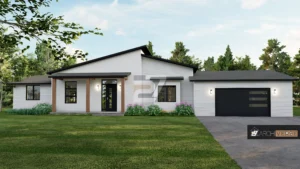
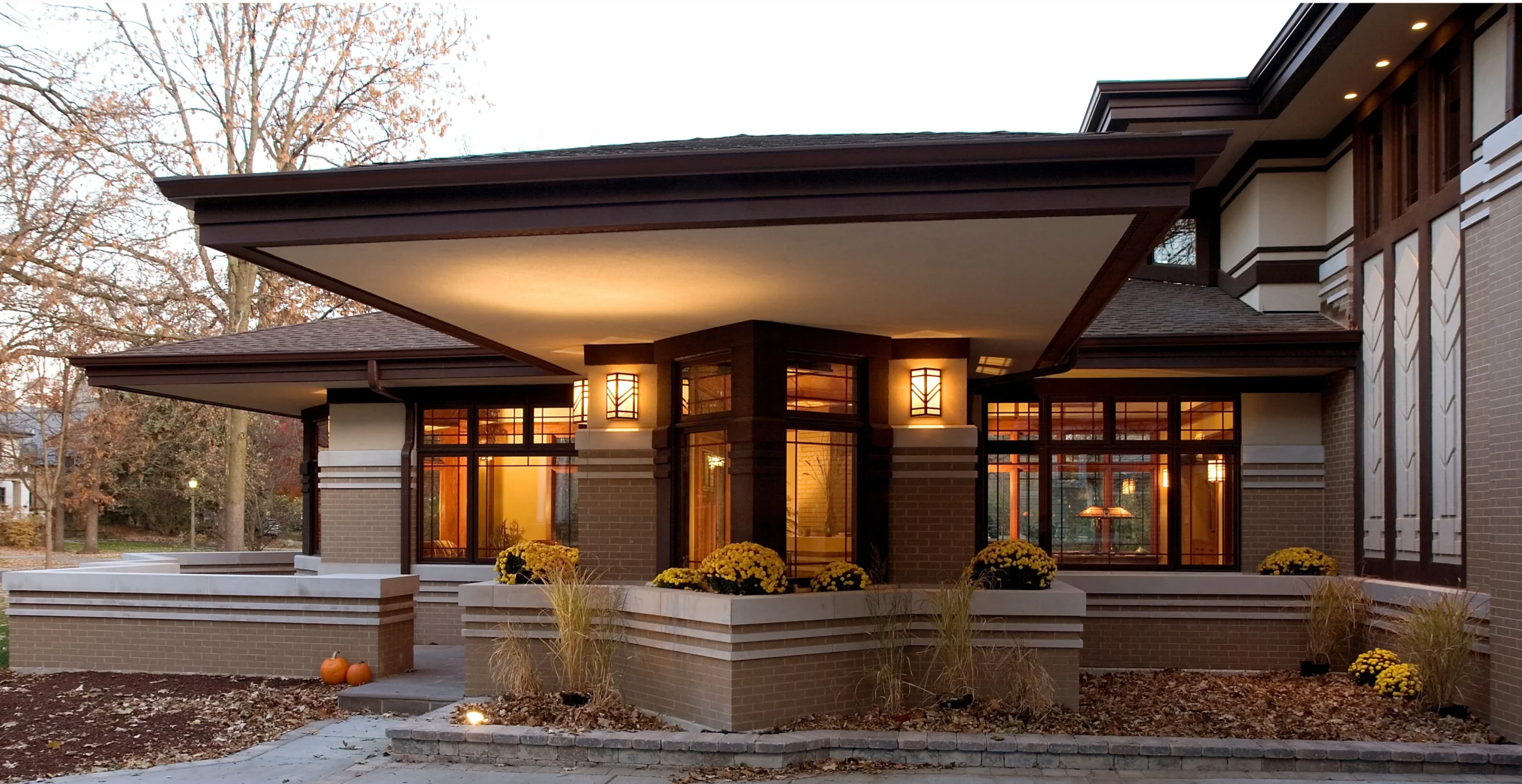
The most important thing that sets it apart is the intentional focus on the horizontal. The low-pitched, hipped roofs, wide overhangs, and layered ribbon windows in a Prairie home design are all supposed to look like the flat horizon. This was very different from the tall, popular forms of the time.
Wright further downplayed or hid vertical features like downspouts and utilized thin Roman bricks to let the eye follow the smooth, relaxing horizontal plane even more. This design choice gives the house an immediate sense of permanence and peace, making it look powerful and like it will always be there.

The Open Floor Plan: Living in the Now
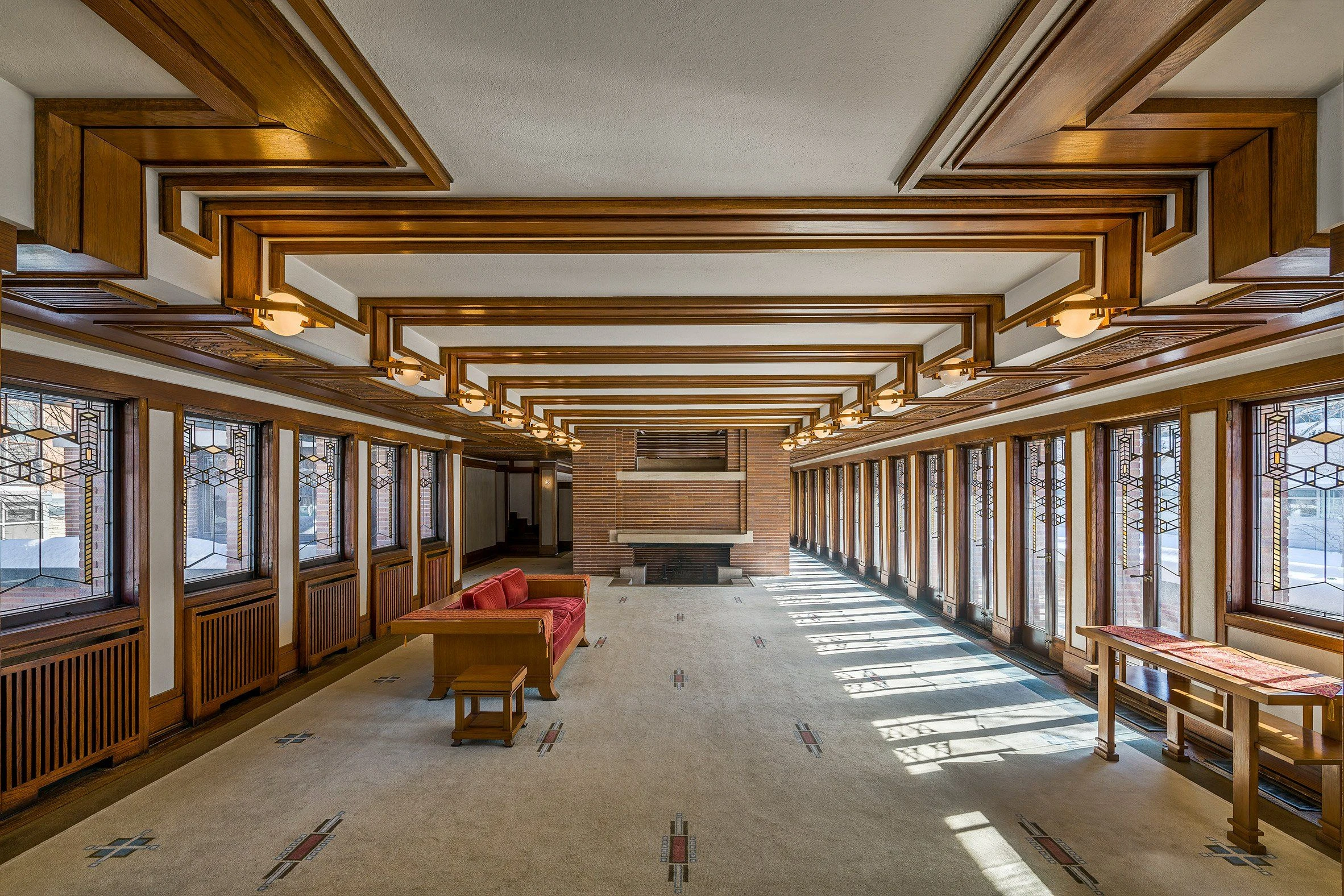
The open floor layout is probably the most lasting contribution of the Prairie School to modern life. Wright took apart the classic boxy house and replaced the separate, inflexible rooms with open, connecting spaces. The living room, dining room, and sometimes the library would all be in the same room, making a useful, shared area that was suited for the new American family life.
The main chimney was the most important part of this new flow. The chimney was sometimes a huge, majestic block of brick or stone that functioned as the architectural anchor and the emotional and physical heart of the dwelling. It replaced the distinct rooms as the main feature. This focal point is a beautiful part of a place that was made for people to come together and enjoy warmth.
The Heartfelt Details: Built-ins and Art Glass
Wright believed in comprehensive design, which meant he was in charge of everything, from the site plan to the smallest fixture. This dedication to craftsmanship made the house become a single piece of art.
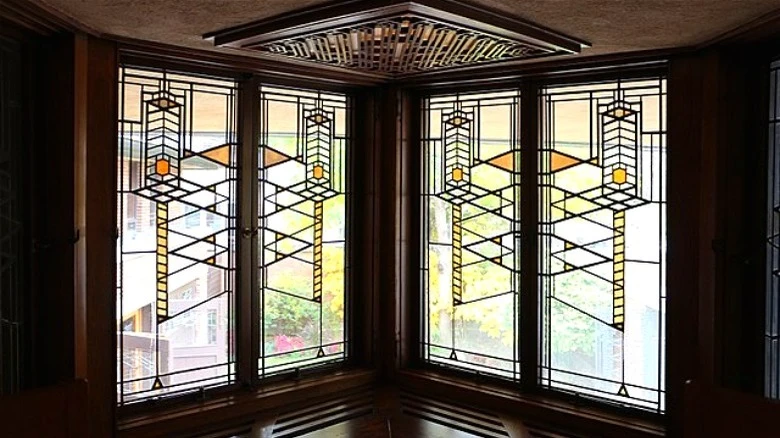
He wanted art glass windows with abstract geometric designs that were inspired by the plants that grow on the prairie. These weren’t just windows; they were “light screens” that let in light from outside while keeping people from seeing inside. **** The warm, filtered light they give out is an important part of the mood. In the same way, furniture was often constructed right into the house, such window seats, cabinets, and shelves. This kept the lines clean and clear, which added to the sense of space and harmony and made the whole building feel like it belonged together.
The Lasting Heart of the Prairie Style
Prairie Style Architecture may not have been as popular after 1915, but it has always had an impact. Frank Lloyd Wright’s ideas on organic architecture laid the groundwork for almost all of the modernist residential design that came after it, including the Mid-Century Modern ranch homes that are so common in American suburbs.
Homeowners are learning how emotionally strong this style is today. It focuses on natural materials, being environmentally friendly, and having useful, open space, which speaks directly to the current yearning for simplicity and connection.
The wonderful secret is more than just a design plan; it’s a real invitation. It asks you to live in peace with your surroundings, your family, and the American spirit of freedom and openness. When you choose Prairie Style Architecture, you’re not simply building a house; you’re choosing a way of life based on beauty, honesty, and nature.
For more blogs like this CLICK HERE!!
Reference:
The Prairie Style | Frank Lloyd Wright Trust