Introduction:
In a world facing climate change and rapid urbanization, Sustainable Architecture — also called Green Architecture — stands at the center of modern design thinking.
It’s not about aesthetics or fashion. It’s about responsibility — creating buildings that reduce environmental harm while improving human life.
Sustainable design seeks balance: between nature and technology, efficiency and comfort, and innovation and ethics.
The philosophy is simple — buildings should work with the environment, not against it.
It’s architecture that saves energy, uses resources wisely, and supports both ecological and human well-being.

Image Credits: architecturaldigest.com
Key Characteristics of Sustainable or Green Architecture:
the core principles every designer should know.
- Energy Efficiency and Passive Design:
Energy efficiency is the foundation of sustainable architecture.
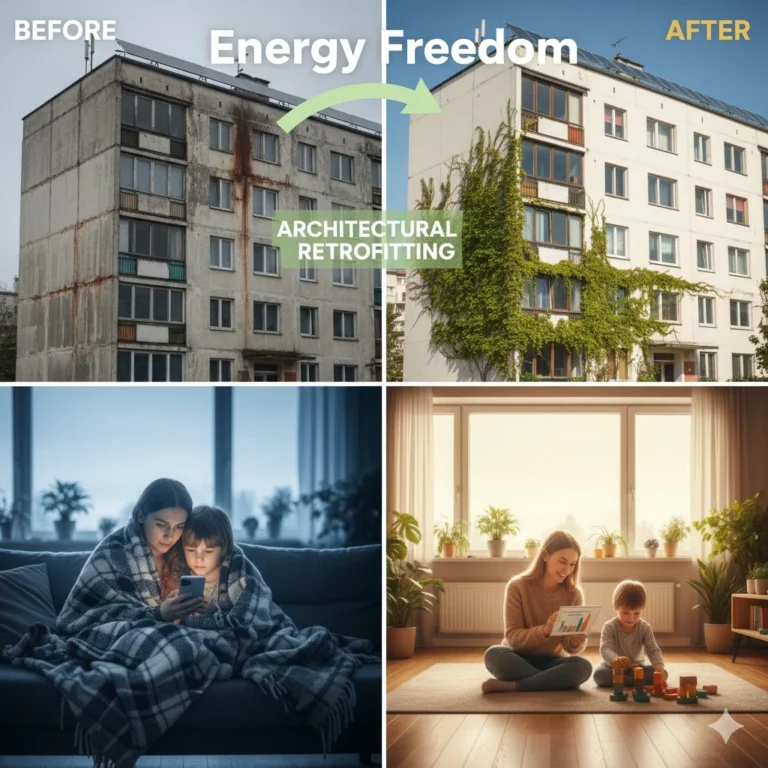
Passive strategies reduce dependence on mechanical systems by using orientation, shading, insulation, and ventilation.
Windows face the sun for warmth in winter, while overhangs and louvers block heat in summer.
Natural airflow, daylight, and thermal mass help maintain comfortable temperatures with minimal energy use.
A well-designed passive building performs like a living organism — adaptive and self-regulating.
- Renewable and Recycled Materials:
Sustainable buildings rely on renewable, recycled, or locally sourced materials.
This lowers embodied energy — the energy used in production and transport.
Materials like bamboo, reclaimed wood, recycled metal, rammed earth, and low-carbon concrete reduce emissions while maintaining durability.
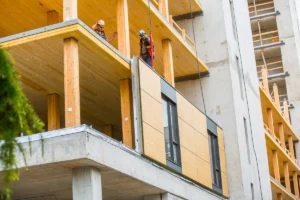
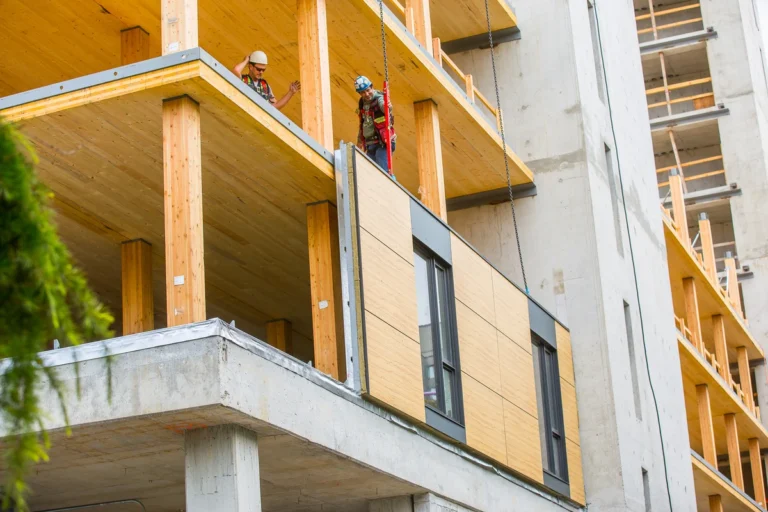
Prefabricated systems also minimize waste and allow efficient assembly.
Every material decision becomes part of the building’s environmental story.
- Green Roofs and Living Walls:
One of the most recognizable features of sustainable architecture is the green roof or living wall.
These systems regulate building temperature, absorb stormwater, and improve air quality.
They create miniature ecosystems that cool cities and restore biodiversity.
Beyond their technical value, green roofs reintroduce nature into dense urban environments, improving mental well-being and reconnecting people with life.
- Water Conservation and Management:
Water-sensitive design treats every drop as valuable.
Sustainable buildings often include rainwater harvesting, greywater recycling, and efficient plumbing systems.
Permeable pavements and landscaped drainage areas help manage runoff and replenish groundwater.
Together, these strategies ensure that the building participates in — rather than disrupts the local water cycle.
- Renewable Energy Integration:
Green architecture isn’t only about saving energy — it’s also about producing it.
Solar panels, wind turbines, and geothermal systems are often integrated into the architecture itself.
Building forms are shaped to maximize solar gain or optimize airflow for turbines.
In advanced cases, buildings become energy-positive, generating more power than they consume.
Here, sustainability becomes both form and function beauty born from performance.
- Adaptive Reuse and Longevity:
True sustainability values what already exists.
Adaptive reuse — transforming old structures for new purposes — reduces waste and preserves cultural memory.
At the same time, new buildings are designed for flexibility and longevity, allowing them to evolve as needs change.
Durability replaces disposability, making sustainability a long-term mindset rather than a temporary feature.
- Human Health and Comfort:
Sustainable design also prioritizes people.
Natural light, fresh air, non-toxic materials, and visual access to greenery all improve comfort and productivity.
This human-centered approach often overlaps with biophilic design, creating environments that enhance well-being while reducing stress.
Sustainability, at its best, sustains both planet and people.
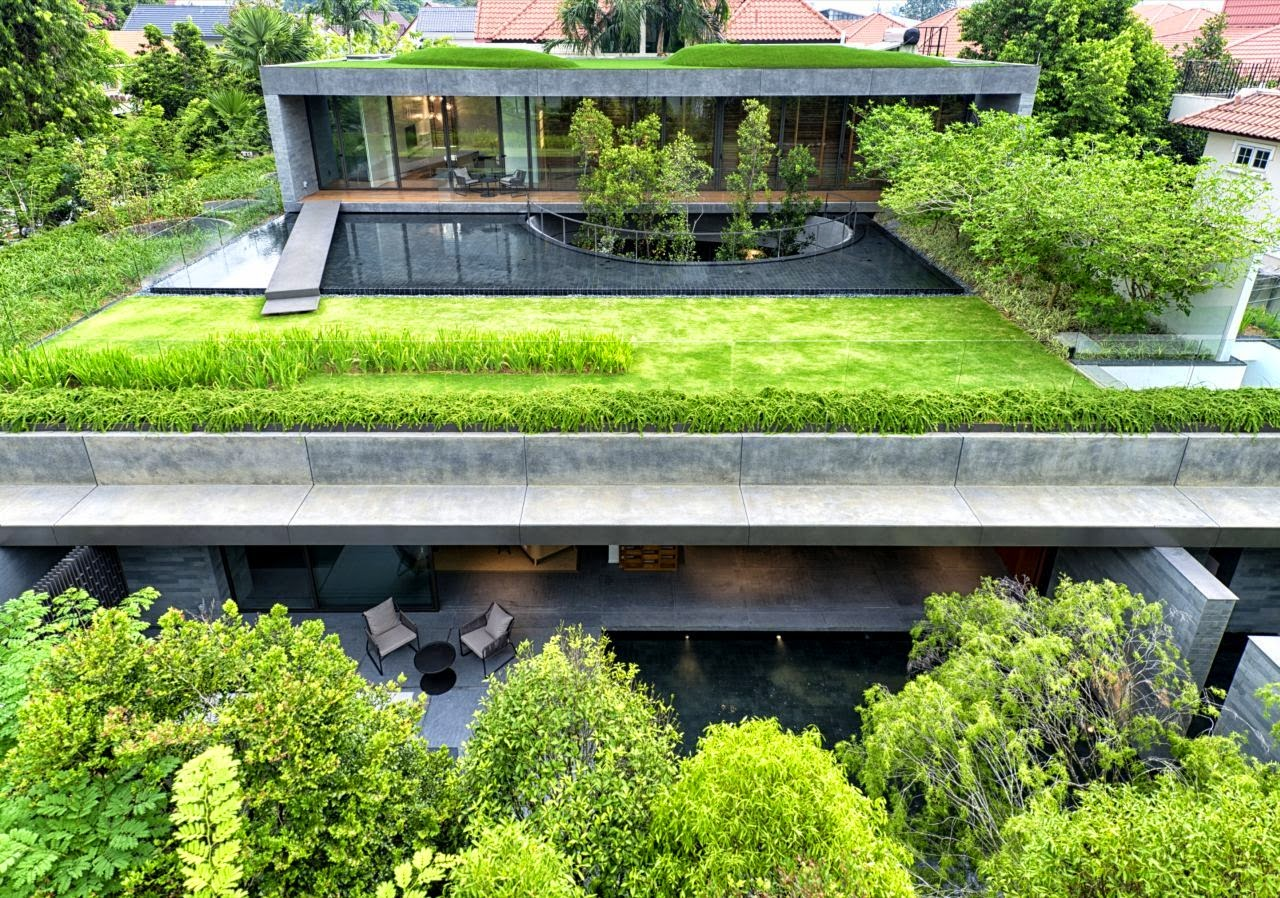
Image Credits: databridgemarketresearch.com
Notable Examples of Sustainable Architecture:
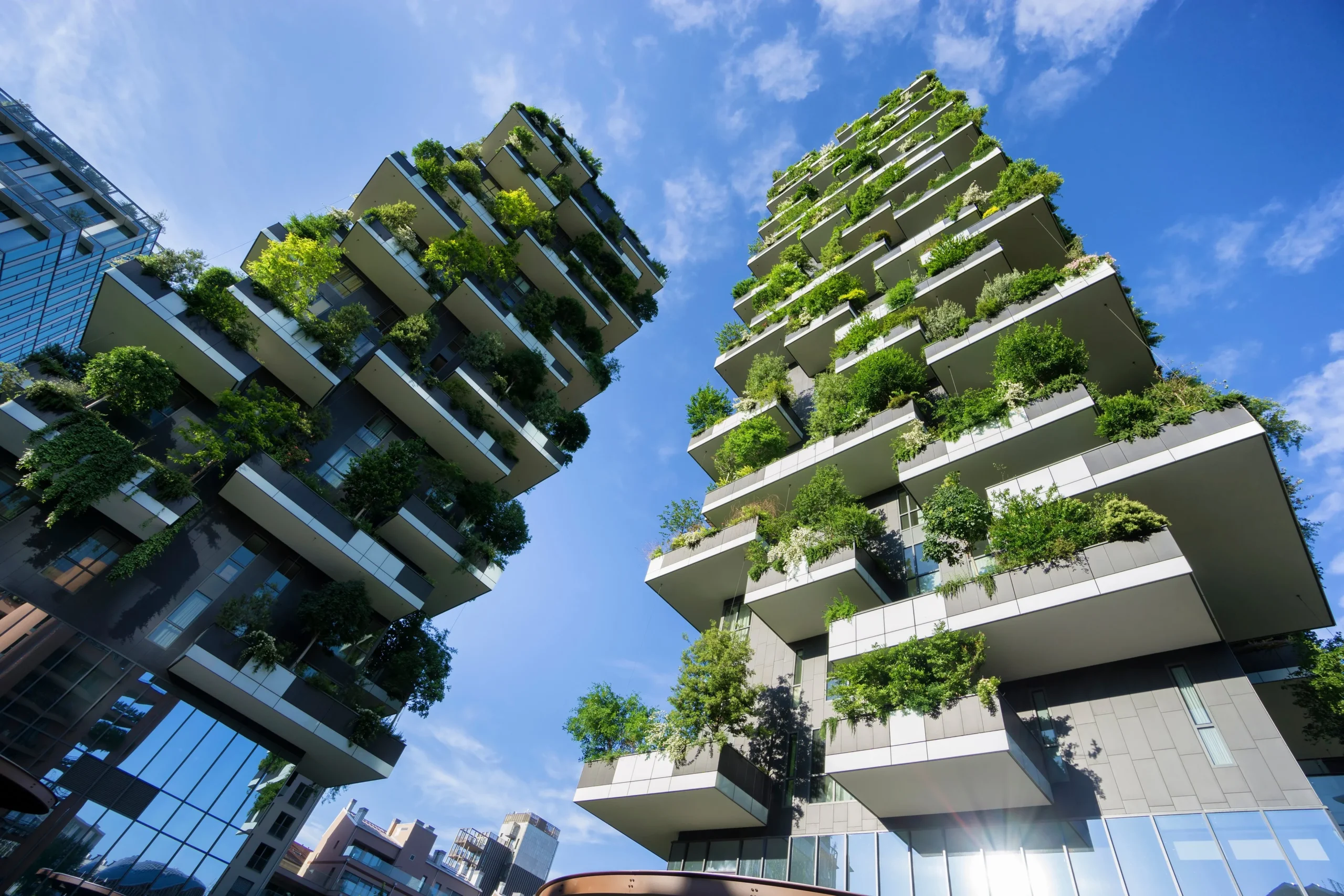
- Bosco Verticale – Milan, Italy (Stefano Boeri Architetti):
This vertical forest reimagines high-rise living.
Covered with over 20,000 trees and shrubs, it filters air, absorbs CO₂, and provides thermal insulation while visually transforming the skyline into a living ecosystem. - The Edge – Amsterdam, Netherlands (PLP Architecture):
Among the world’s most energy-efficient office buildings, The Edge uses solar panels, rainwater collection, and smart automation to reduce waste.
Its intelligent systems balance lighting, temperature, and energy use in real time. - One Central Park – Sydney, Australia (Jean Nouvel & Patrick Blanc):
Famous for its green façades and heliostat mirrors, this project combines vegetation, renewable power, and recycled water systems to create a model of dense yet ecological urban living.

One Central Park by Jean Nouvel, Sydney, Australia
How Sustainable Architecture is Affecting Modern Design:
Sustainability has transformed architecture from an art of construction into an art of conservation.
It’s redefining how buildings are designed, built, and operated — from small homes to megacities.
Energy modeling, digital twins, and performance-based design are becoming standard tools.
Certifications like LEED, BREEAM, and WELL have made sustainability measurable and accountable.
Governments now require green standards for new developments, embedding sustainability into policy and practice.
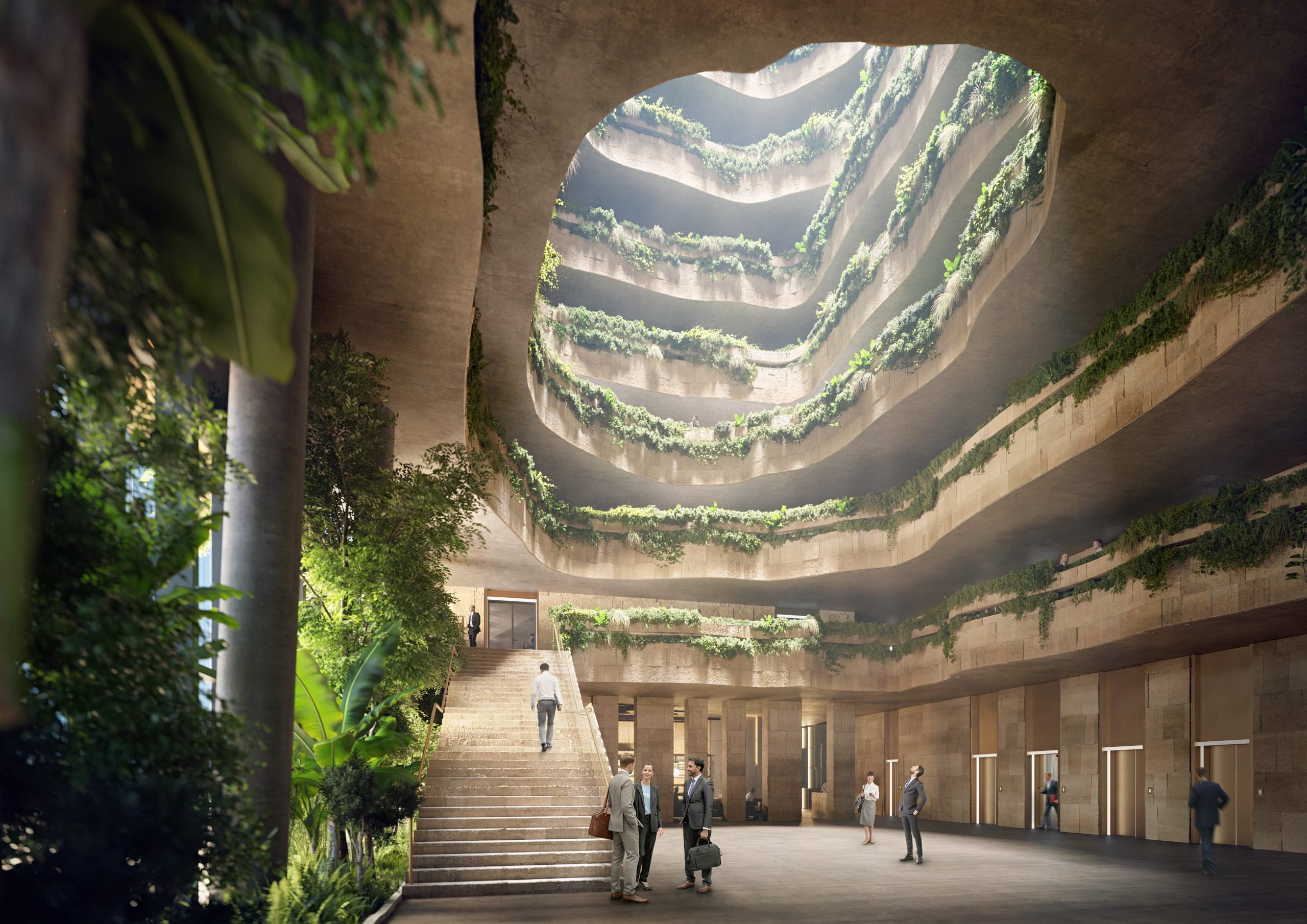
Image Credits: rmjm.com
But the deeper change is cultural.
Sustainable architecture teaches us that design is not just about creating spaces — it’s about shaping behavior, reducing impact, and building resilience.
As cities grow, sustainable design offers the only viable future:
architecture that sustains both life and the planet.
For more blogs like this CLICK HERE!!
Reference:
Sustainable Architecture: History, Characteristics, and Examples – Archute
Green architecture | Sustainable Building Design & Benefits | Britannica