Neo-Futurism Architectural Style
Imagine standing in front of a building that doesn’t look built — it looks grown.
Its skin curves like a wave, its structure feels alive, and its presence seems to belong to a future that has already arrived.
That’s the world of Neo-Futurism — a design movement that pushes architecture beyond steel and concrete into a realm where form, technology, and imagination blend into one.
Born from late modernism and shaped by digital innovation, Neo-Futurism defines the architecture of our century — expressive, data-driven, and emotionally charged.
Let’s break down the core philosophy and key characteristics of this visionary style — the design principles that guide architects to create the future today.

Denis laming, CC BY 3.0, via Wikimedia Commons
Core Philosophy
At its core, Neo-Futurism is driven by optimism — the belief that architecture can embody progress.
It rejects nostalgia and celebrates innovation. Instead of copying the past, Neo-Futurism envisions what’s next.
Its design philosophy revolves around three main ideas:
Technology as a creative force — not just a tool, but a design partner.
Form as emotion — buildings should move people, not just shelter them.
Fluidity and motion — architecture should mirror the dynamic pace of modern life.
Neo-Futurism treats architecture as an evolving organism, one that responds to its environment, adapts to technology, and inspires human imagination.
It’s not just about building structures — it’s about building experiences.

Diliff, CC BY-SA 3.0, via Wikimedia Commons
Key Architectural Features of the Style
Now let’s focus on the main design elements — the core characteristics that define Neo-Futurism and guide its visual and spatial identity.
Fluid, Dynamic, and Organic Forms
Neo-Futurist design abandons straight lines and rigid boxes. Instead, it embraces movement.
Curved silhouettes, aerodynamic shapes, and flowing surfaces are central to its identity.
These organic forms are not decoration — they’re functional, aerodynamic, and symbolic of constant evolution.
When designing in this style, think in terms of continuity — walls that flow into ceilings, structures that merge with surroundings, and forms that evoke speed and life.
Parametric and Digital Design
Neo-Futurism is inseparable from digital technology.
Parametric design tools like Rhino and Grasshopper allow architects to experiment with complex geometries, test environmental performance, and generate forms through algorithms.
This is where the human imagination meets computational precision.
The result is architecture generated by logic and emotion combined — every curve, every surface has purpose, reason, and rhythm.
For designers, this means embracing technology not as constraint but as creative liberation — to design what was once impossible to draw by hand.
Expressive Structural Systems
Structure in Neo-Futurism isn’t hidden — it’s celebrated.
Beams, ribs, and skeletal frameworks become visible expressions of strength and motion.
This principle can be seen in Santiago Calatrava’s works, where the structure resembles a living being — wings, bones, or shells.
The construction itself becomes sculpture, where every column, joint, and frame contributes to the narrative of motion.
When designing, think of structure as part of the story, not a background element.
Lightness and Transparency
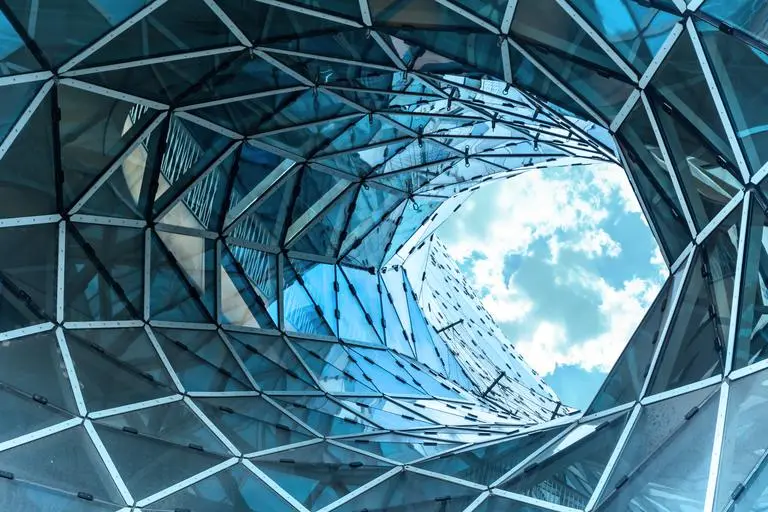
One of the most recognizable traits of Neo-Futurist architecture is the pursuit of weightlessness.
Designers aim to make structures appear as if they’re floating, gliding, or suspended in air.
Extensive use of glass, steel, and composite materials achieves this visual lightness.
Transparency blurs boundaries between interior and exterior — turning solid walls into dynamic filters of light and shadow.
This emphasis on openness and illumination gives Neo-Futurist buildings a spiritual, almost ethereal quality.
Integration of Nature and Technology
While it may seem highly artificial, Neo-Futurism is deeply inspired by nature’s systems.
It seeks harmony between the organic and the mechanical — buildings that breathe, adapt, and respond to environmental stimuli.
Through biomorphic geometry and smart materials, architects design structures that mimic living organisms — adjusting to sunlight, airflow, and human movement.
In this sense, Neo-Futurism isn’t cold or mechanical — it’s a technologically advanced form of natural design.
Material Innovation
Materials define the futuristic language of Neo-Futurism.
Lightweight alloys, glass, titanium, and carbon fiber are preferred — materials that allow freedom of form and flexibility of expression.
But beyond aesthetics, the focus is on performance — energy efficiency, durability, and adaptability.
In the most advanced examples, facades act as responsive skins — adjusting light, temperature, and ventilation automatically.
This is architecture that learns — evolving with its environment instead of resisting it.
Emotional Experience and Symbolism
Perhaps the most overlooked yet defining feature of Neo-Futurism is its emotional depth.
Every form, curve, and void is designed to evoke a psychological response — wonder, curiosity, even awe.
This emotional engagement is what separates Neo-Futurism from mere digital experimentation.
It’s not technology for technology’s sake — it’s about using innovation to reconnect humans with space in a poetic way.
Few Iconic Examples
To see these principles come alive, look at the world’s most recognized Neo-Futurist landmarks:
Heydar Aliyev Center – Zaha Hadid (Baku, Azerbaijan)
A masterpiece of fluidity. There are no straight lines, no boundaries — just movement. It redefines how a building can express emotion through form.
City of Arts and Sciences – Santiago Calatrava (Valencia, Spain)
A skeletal wonder inspired by organic anatomy — both futuristic and natural, mechanical yet human.
Museum of the Future – Dubai
Designed by Killa Design, this building represents data, humanity, and innovation — symbolizing an endless pursuit of knowledge. Its void at the center represents the unknown — the future itself.
Galaxy SOHO – Zaha Hadid Architects (Beijing, China)
A continuous spatial system of bridges and layers, proving how parametric design can produce fluid, living environments.
Each of these examples embodies one principle: form, function, and emotion united through technology.

How It’s Affecting Architecture
Neo-Futurism isn’t just a style — it’s a transformation in how architects think and design.
It’s redefining architectural education, pushing students and professionals toward computational design, sustainability, and emotional storytelling.
Cities are beginning to reflect Neo-Futurist ideals — with smart infrastructures, adaptive buildings, and data-integrated planning.
From concept to construction, every stage of design now involves digital simulation, performance modeling, and parametric exploration.
More importantly, Neo-Futurism restores something architecture had lost for decades — vision.
It revives architecture’s role as a dream-driven art, not just a technical discipline.
The future it imagines is not cold or robotic — it’s human, fluid, and alive.
And Neo-Futurism is exactly that — the art of making the future feel alive.
For more content like this CLICK HERE!!!
Reference:
NEO-FUTURISTIC ARCHITECTURE ⋆ Archi-Monarch
Exploring Neo-Futurism In Architecture: A Comprehensive Guide