The Day the Sky Opened: A Wake-Up Call for Copenhagen
Meteorologists named the storm that hit Copenhagen on July 2, 2011, a “1,000-year storm.” A huge cloudburst dropped more than 150mm of rain on the city in only two hours.
The outcome was terrible: $1 billion in damages, roadways that were completely underwater, and a sewage system that actually burst at the seams.
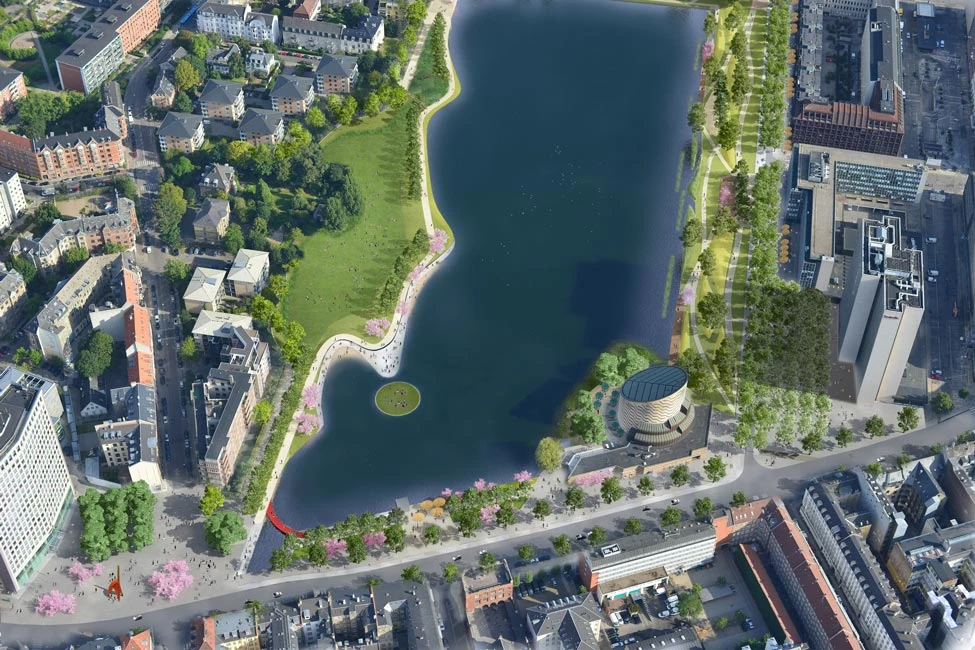
This calamity wasn’t just bad weather; it started an amazing movement in the city. Copenhagen knew that using concrete to fight water was a losing battle. The city had to stop acting like a fortress and start functioning like a sponge if it wanted to thrive on a warming world.
The “Sponge City” Idea: Working with Nature
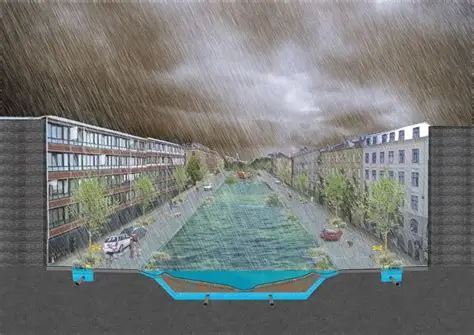
The Cloudburst Management Plan is the most important part of Copenhagen’s plan. The city spent money on “green-blue” infrastructure instead of billions on big underground “grey” pipelines that are empty 99% of the time.
The topography of a “Sponge City” is meant to soak up, slow down, and change the flow of water. Copenhagen has converted a climate hazard into a communal benefit by turning its parks, squares, and streets into a working drainage system.
The Legend of Enghaveparken: Healing Through Infrastructure
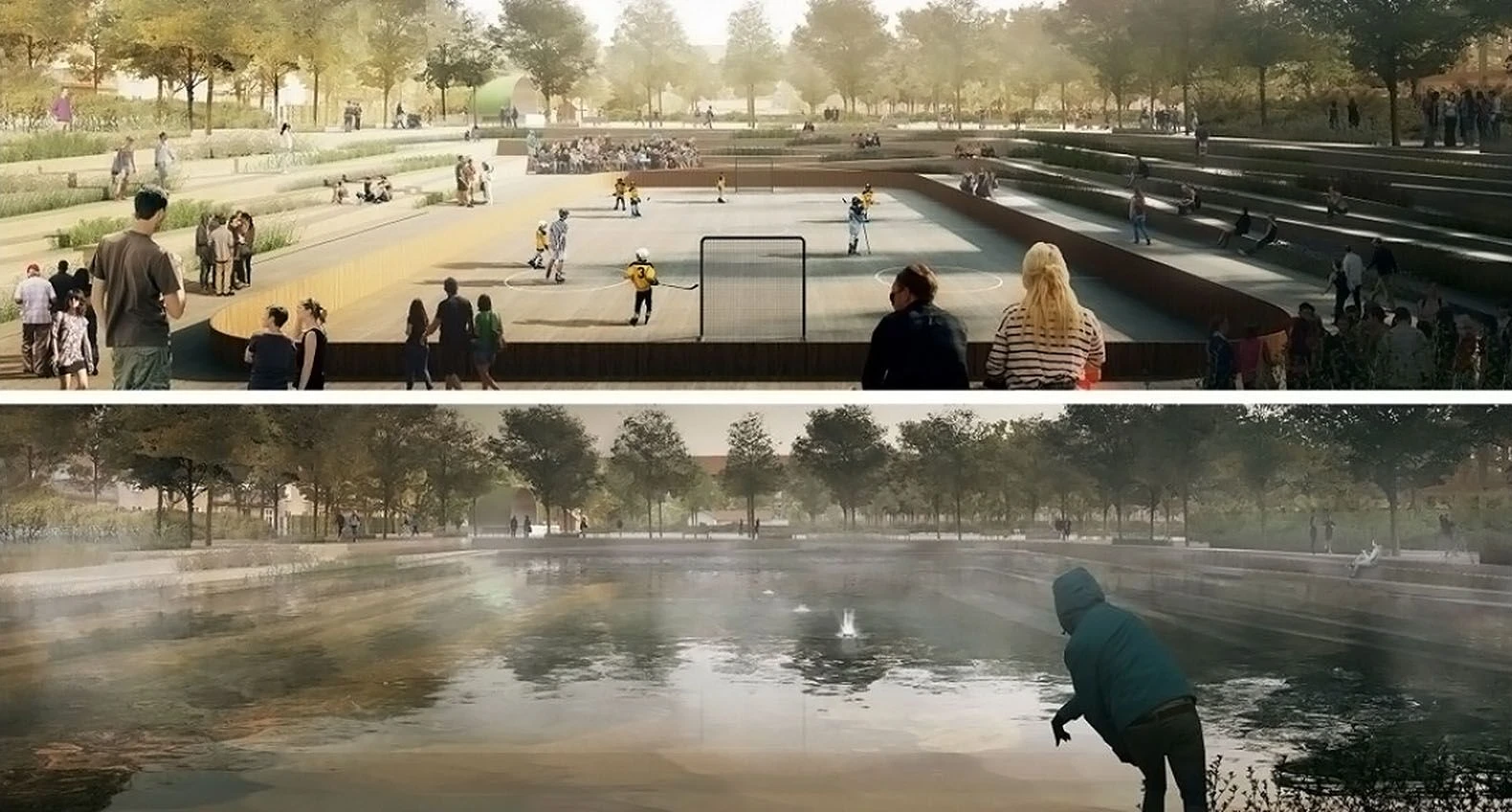
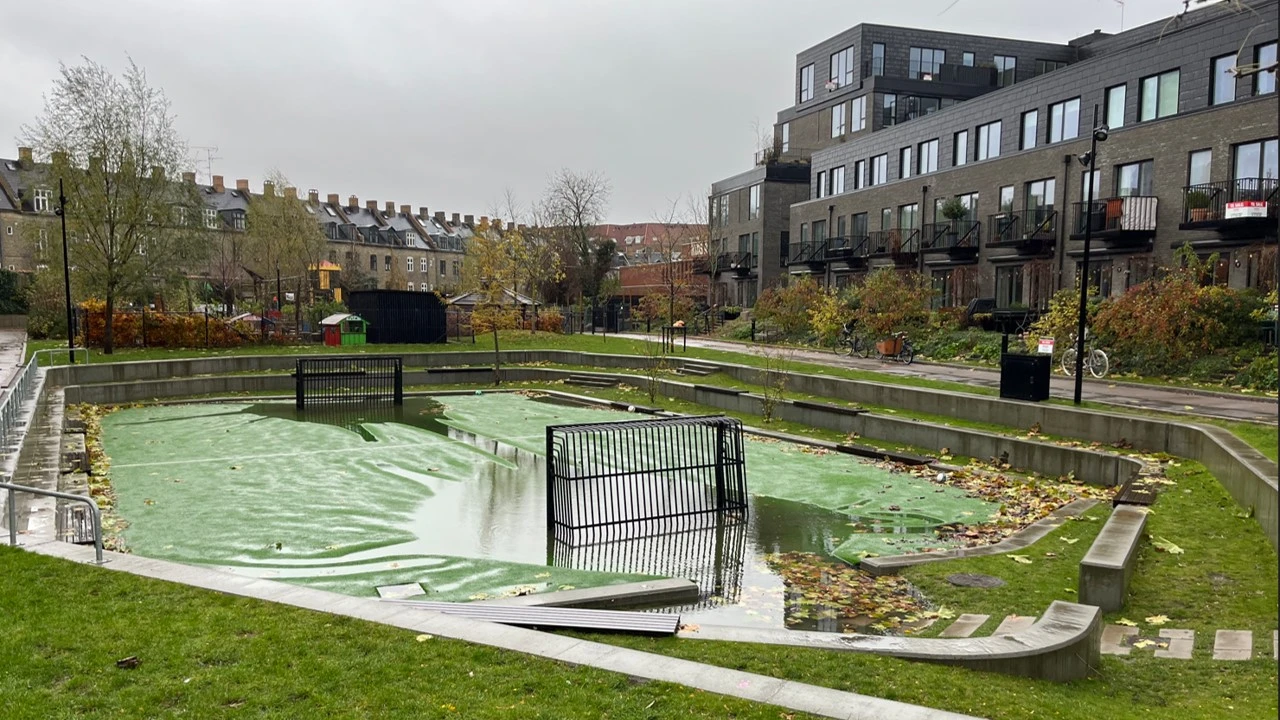
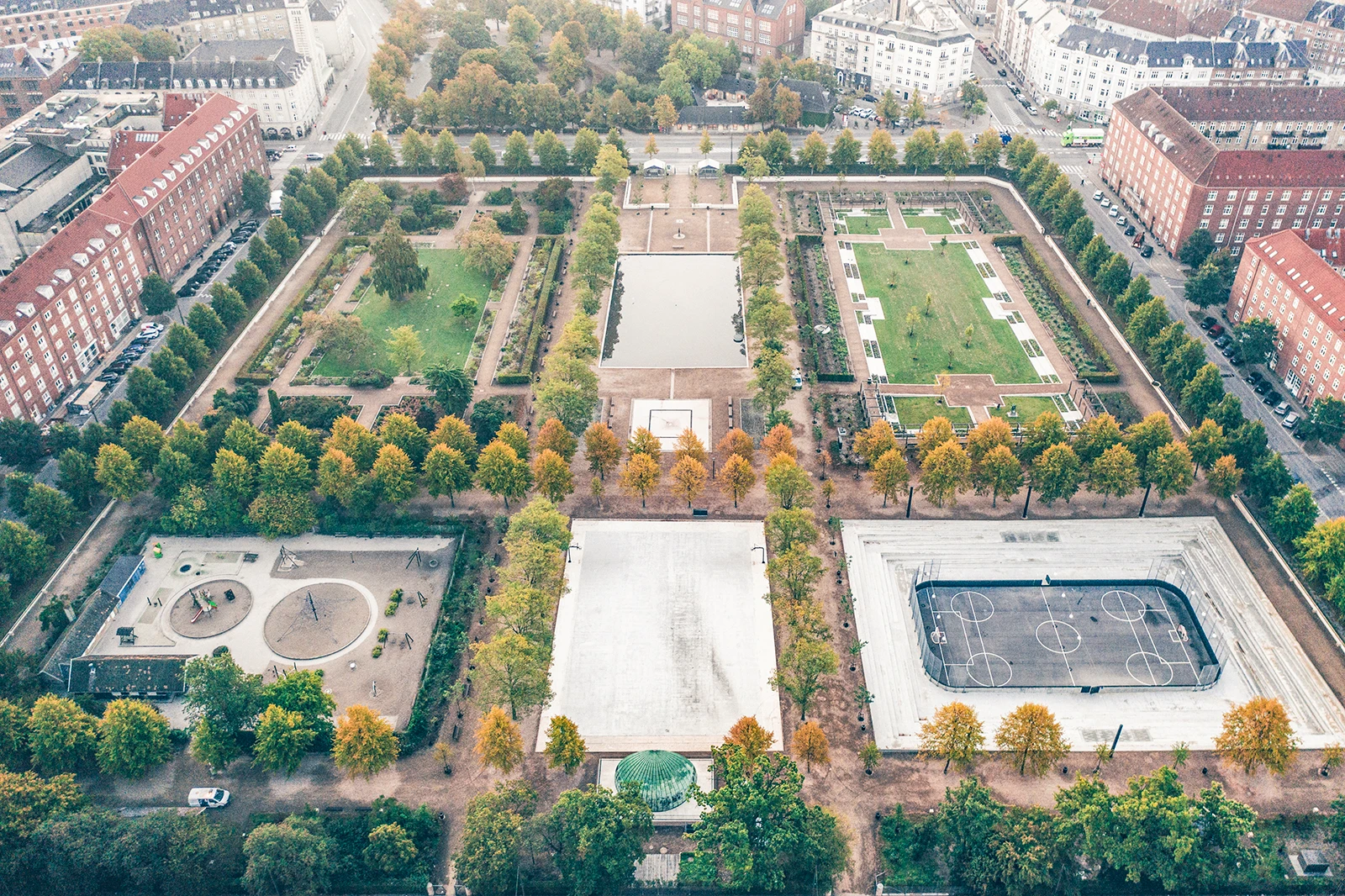
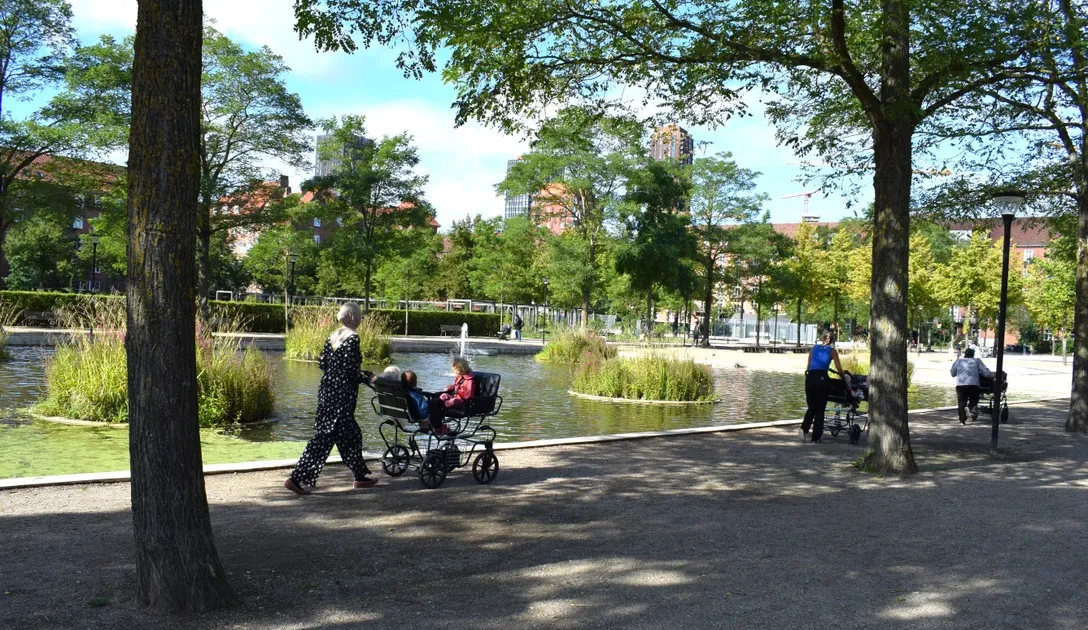
Enghaveparken is the best place to watch healing in action. It used to be a classic park from the 1920s, but it was recently turned into the city’s biggest “floodable” oasis.
A Hidden Reservoir
Enghaveparken is a lively place for skaters, families, and people who just want to relax on a sunny day. But there is a profound secret hidden behind its beauty:
- The Sunken Perimeter: A low concrete wall surrounds the park and is used as a bench most of the year.
- The Change: When it rains heavily, the gates at the park’s entrances close on their own. The park starts to fill up. It can contain 22,600 cubic meters of water, which makes it a big “dustpan” that protects the Vesterbro area around it.
- The Clean Return: After the storm, the water is filtered and progressively let back into the port. This stops the sewage system from overflowing.
Tåsinge Plads: The First Square in the World That Can Handle Climate Change
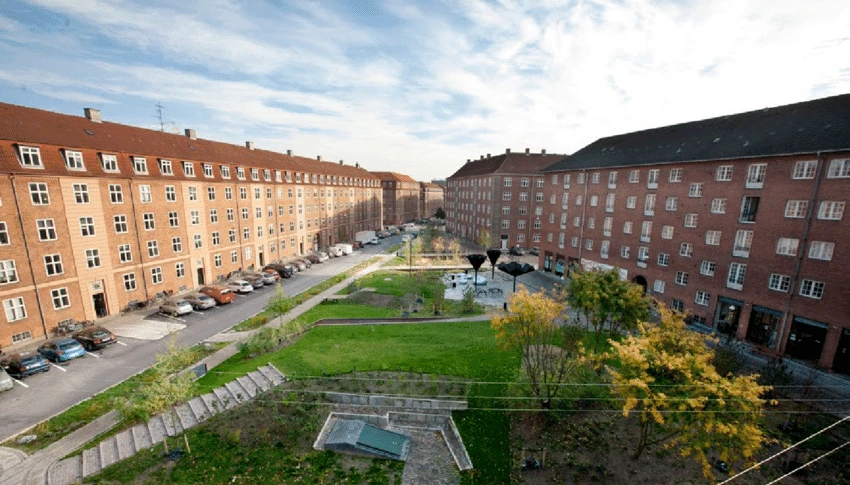
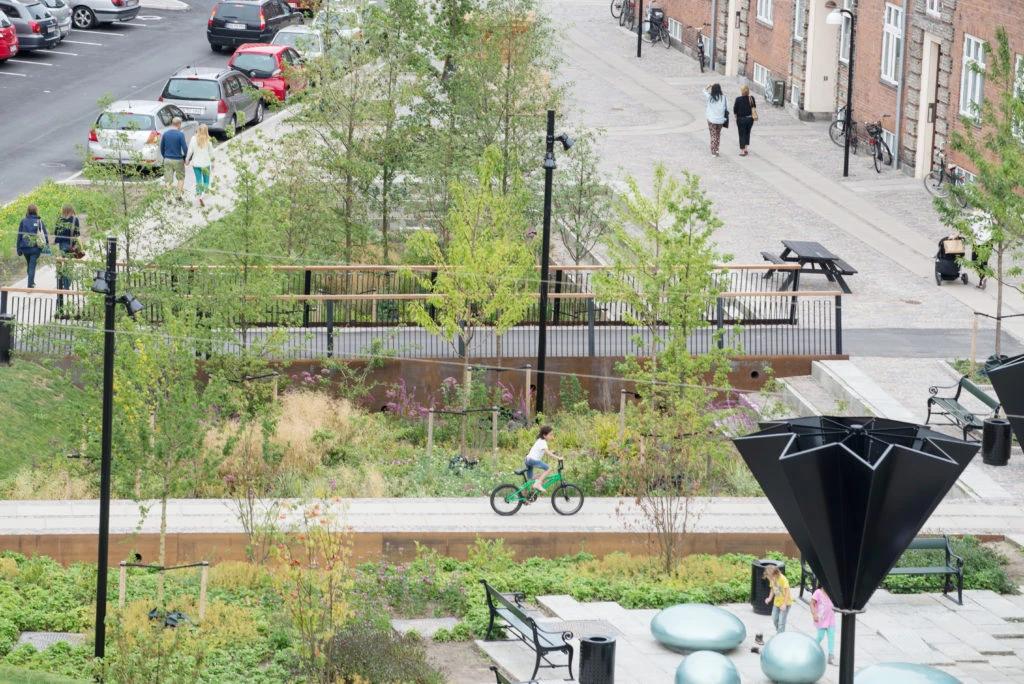
Tåsinge Plads, in the center of the Saint Kjelds neighborhood, shows that urbanism that can stand up to climate change can also be fun and soulful.
This used to be a piece of asphalt where parked cars were everywhere. It is become a “urban wilderness.”
- Rain Parasols: These sculptural “umbrellas” absorb rainwater and send it to tanks underground.
- Kid-Powered Pumps: Kids can bounce on bouncy floor panels that use kinetic energy to pump stored rainwater back to the surface so they can play or feed the park’s “rainforest” plants.
Four Important Lessons for Big Cities
Multifunctionality is the New Gold Standard
Cities nowadays can’t afford land that can only be used for one thing. A flood wall that just blocks water is a waste of space. Copenhagen’s parks are inspiring because they generate societal value every day (via recreation, biodiversity, and cooling) and only become “infrastructure” when it rains.
The “Fabric-First” Method
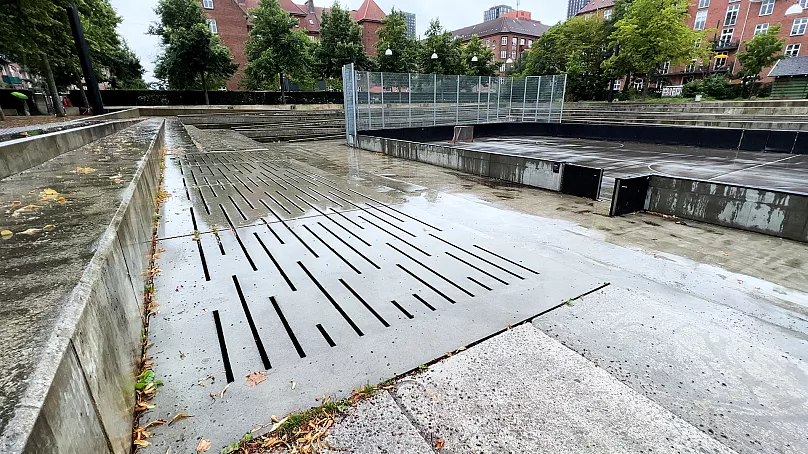
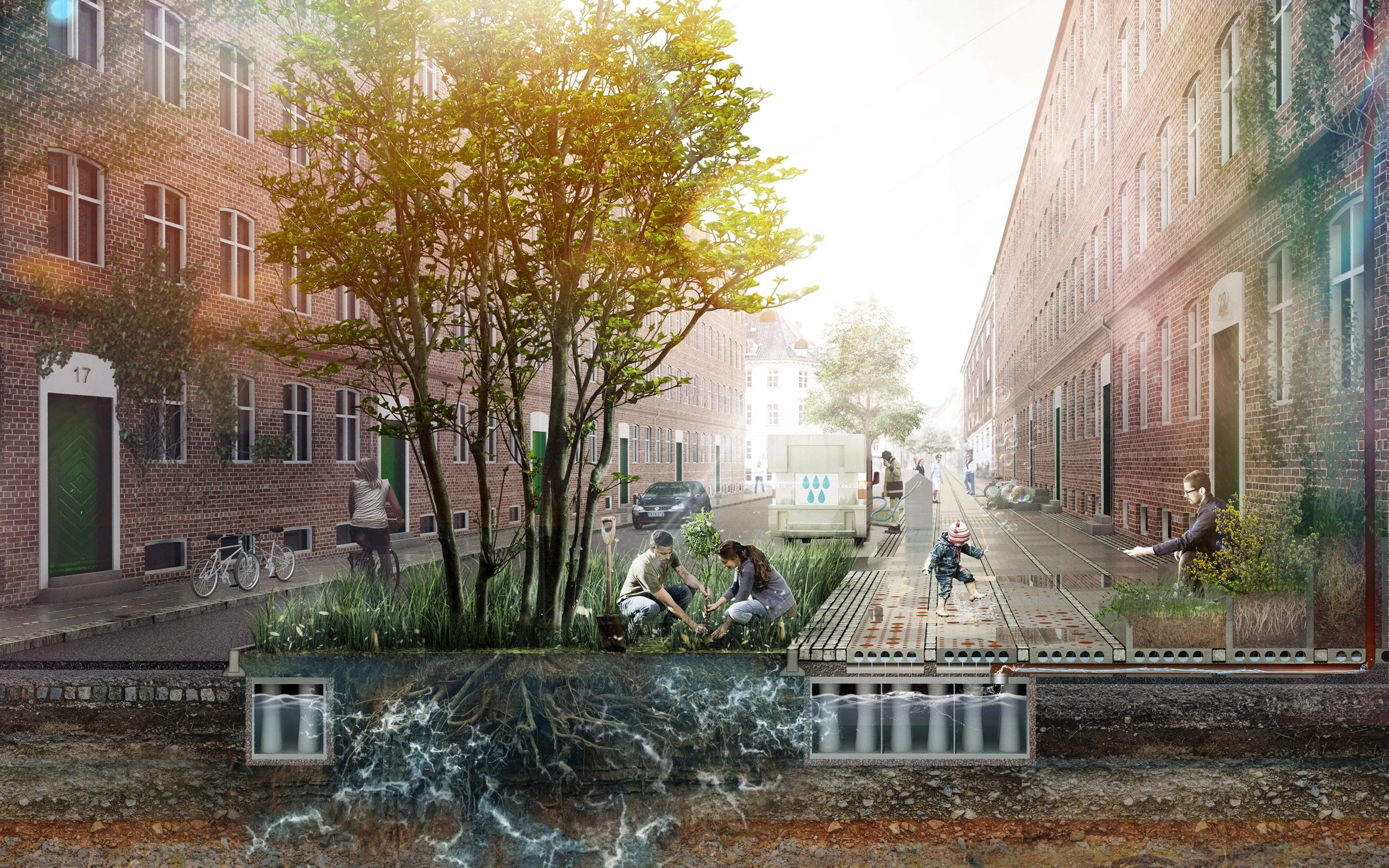
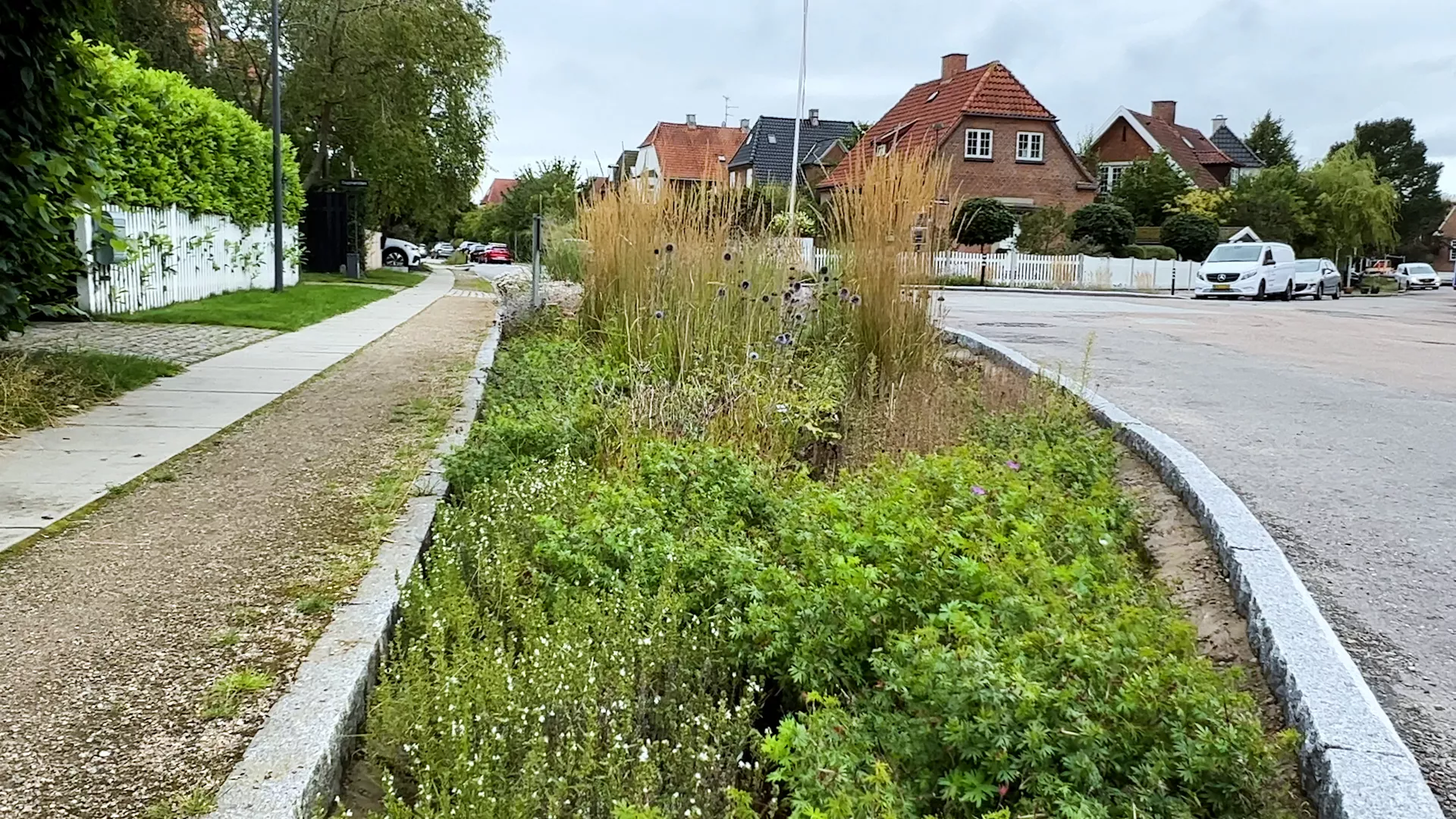
Copenhagen puts more weight on surface-level solutions. They deal with “everyday rain” where it falls by installing permeable pavements and bioswales (vegetated ditches). This stops the “flash flood” effect, which happens when water speeds up and gets bigger on asphalt before it hits the sewers.
Planning for the “1% Event”
The city’s plan takes into account varied amounts of rain:
- Level 1 (Daily): Rain gardens soak up water in the area.
- Level 2 (Moderate): Cloudburst boulevards, which are roadways that look like a “V,” direct water toward the harbor.
- Level 3 (Extreme): Huge flood parks like Enghaveparken are used for emergency storage.
Social Legitimacy Through Co-Design
One of the best things about these initiatives is that they weren’t foisted on the people who lived there. More than 10,000 people from the city helped plan the “Climate District.” People feel like they own and are proud of their parks when they help design them. This makes the move to a greener city a shared success.
The Economic Case: Why “Green” Is Better Than “Grey”
Is this a lot of money? Yes. It is thought that the Copenhagen Cloudburst Plan will cost about €1.9 billion over the next 20 years. But the “cost of doing nothing” was thought to be substantially higher because of insurance claims and damage to infrastructure.
Also, nature-based solutions are generally half as expensive as making sewers bigger. They also give “hidden” dividends:
- Higher Property Values: People want to live in green communities.
- Less heat in cities: Plants cool the city during summer heat waves.
- Health Benefits: Having access to green space can help you relax and make the air cleaner.
A Plan for Staying Alive
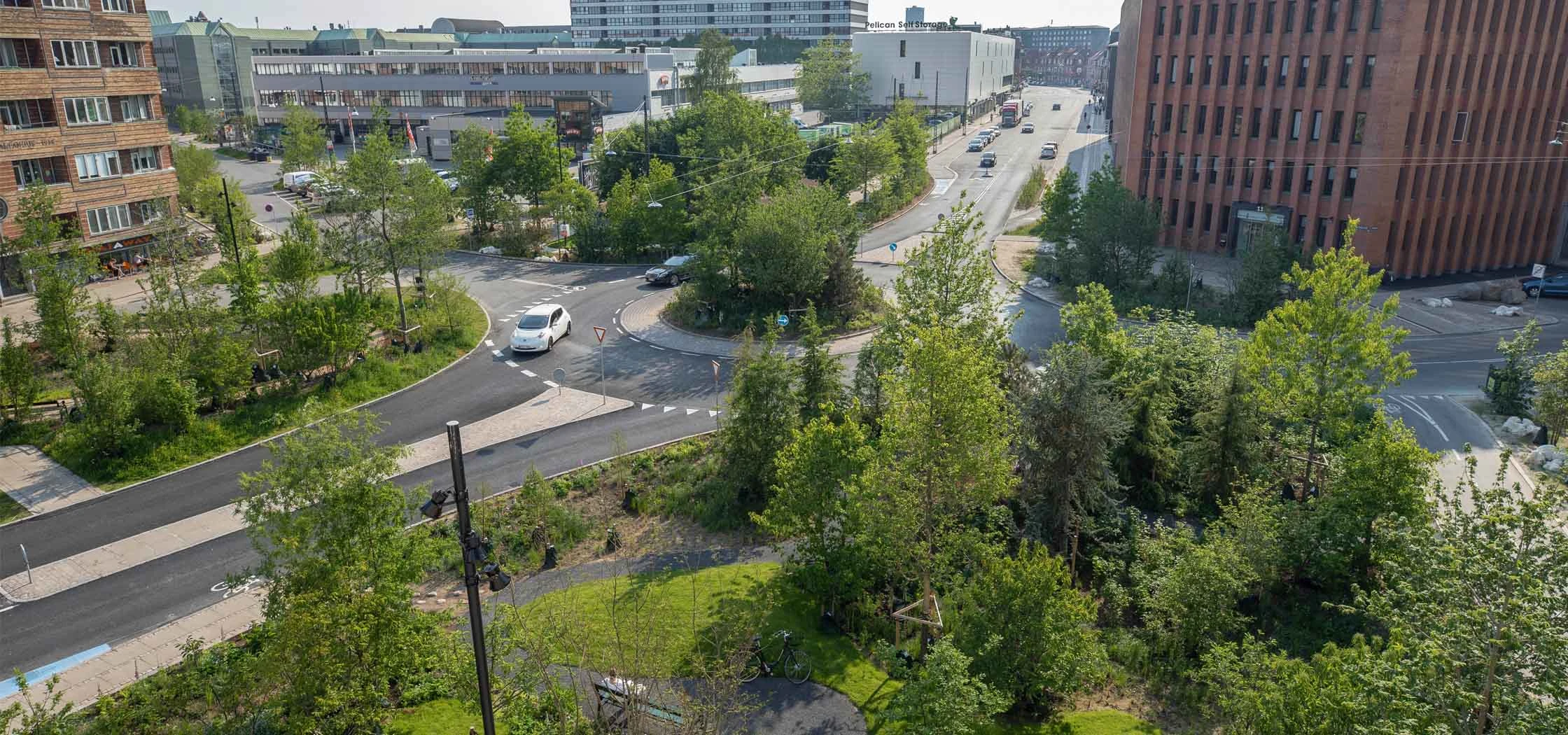
The lessons from Copenhagen are evident as we move ahead to 2030 and beyond. We can’t create cities that don’t take into account how water flows naturally. We are not only protecting our basements by adopting climate-resilient urbanization; we are also saving our urban souls.
Copenhagen is proof that a city can be both a high-tech city and a healthy ecosystem. The rest of the globe should follow suit and start making the “sponges” of the future.
Quick FAQ: The Flood Parks in Copenhagen
Q: Does the water at the parks get dirty?
A: Most parks use “bio-filtration,” which is a layer of soil and certain plants that naturally remove contaminants from the water before it gets to the groundwater or harbor.
Q: Do these techniques work in places with less rain?
A: Yes, for sure. The “Sponge City” idea works just as well for “harvesting” rainwater to use during dry spells. This method is being studied in cities from Abu Dhabi to Los Angeles.
Q: What effect do these parks have on taxation in the area?
A: A lot of these projects in Copenhagen are paid for by water rates. This may raise monthly payments a little, but it eliminates the huge, unplanned costs of recovering from a flood.