Think about what it would be like if buildings were like trees. Nothing in a forest is ever really “wasted.” When a tree falls, it doesn’t become trash; it becomes the base for the next generation of life, full of nutrients. For hundreds of years, buildings made by people have done the opposite. We have erected monuments to “the now” by taking raw minerals from the ground, shaping them into strong structures, and then breaking them down into dust when they are no longer useful.
By the end of 2025, the building sector around the world is expected to throw away an unbelievable 2.2 billion tons of trash into landfills every year. That means that every year, 500,000 Olympic-sized swimming pools would be filled with concrete, steel, and wood.
But a revolution is coming. The day of the Immortal Building is upon us. We are studying how to make buildings that will last forever via the lens of “Circular Architecture”. These buildings aren’t dead ends; they’re a lively, repeating chorus of materials that can be reborn, reused, and recycled forever.

Changing the Paradigm: The Architecture of Healing
People commonly talk about the circular economy in relation to plastic bottles or quick fashion, yet its biggest effects are happening in the built environment. Circular design isn’t simply a “green” trend; it’s a whole new way of thinking about space. It changes the way we think about buildings from considering them as permanent things to seeing them as transitory groups of important resources that are always changing.
Did you know? About 80% of a building’s total influence on the environment is set when it is designed. The building’s fate is already set in stone before the first shovel hits the ground. It will either be a useful resource in the future or a mound of rubbish.
We aren’t simply building a house when we design with circularity in mind; we’re also starting a healing process for the earth. We cut down on the 40–50% of global raw material extractions that the building sector uses by keeping resources in use for as long as possible.
The Secret Ingredient: Design for Disassembly (DfD)
Design for Disassembly (DfD) is the idea that the building will last forever. “Wet” connections, such concrete, glue, and chemical mortars, are what hold buildings together in the past. These materials are strong, but they make it almost impossible to take apart parts of a building at the end of its life without breaking them.
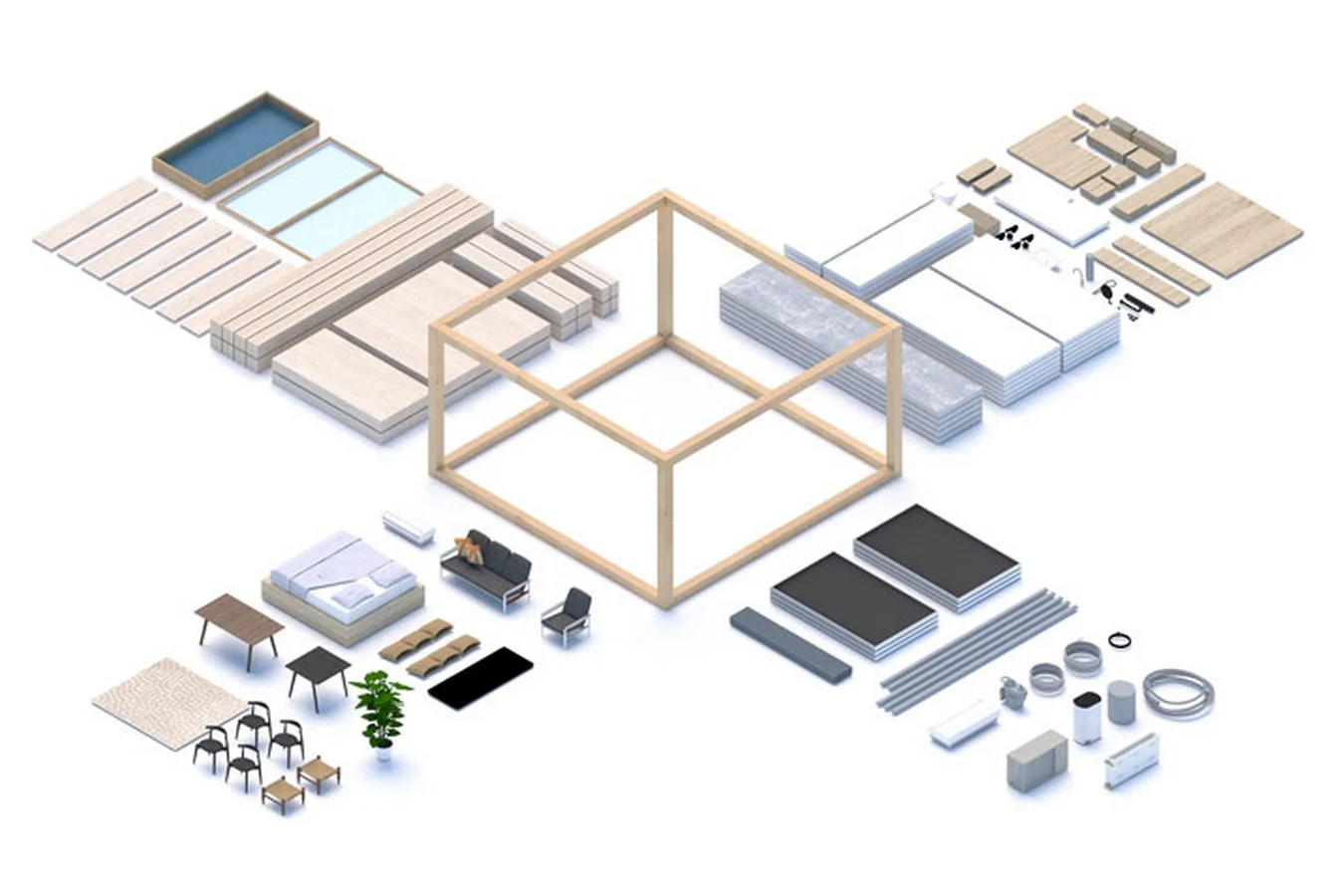
Think of traditional building as a cake: once you bake the eggs, flour, and sugar together, you can’t get the eggs back. But DfD treats a building like a huge Lego set.
What makes DfD a game-changer:
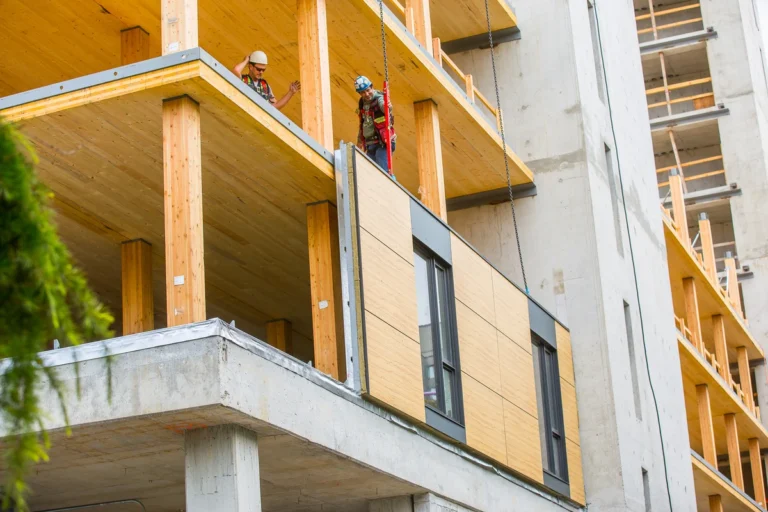
- Modular “Lego” Systems: Beams, panels, and facades have “dry” joints, which are bolts, screws, and interlocking joints that let them be taken apart and put back together somewhere else.
- Keeping worth: The materials lose most of their worth when a building is torn down. When it is taken apart, the materials keep their strength and value.
- Infinite Adaptability: A circular building can change as the people who live in it do. Want to turn your office into a city farm? DfD lets you change or remove internal modules without hurting the structure’s skeleton.
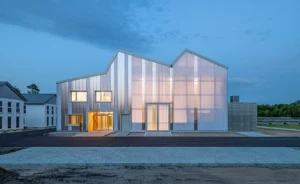
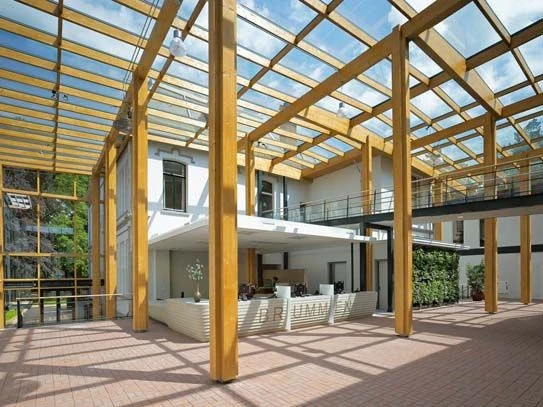
The Brummen Town Hall in the Netherlands is a great example from the actual world. The architects literally figured out the “residual value” of the building’s parts at the conclusion of its 20-year lease, which is 90% of what they could take apart. It’s not simply a building; it’s a bank account built of wood and steel.
Material Passports: The Digital Heart of Stone
How can we tell what a structure is made of fifty years after the architect who built it has retired? We didn’t do it in the past. We would break down walls only to find dangerous materials or alloys that we didn’t know how to recycle.
The Material Passport is here. This is a digital ID that is often based on BIM (Building Information Modeling) and blockchain technology. It keeps account of every part of a building, including where the steel came from, how the wood was handled, and how to securely take it down.
We make sure that future generations don’t see a “ruin” by making these digital twins. Instead, they will view a high-quality library of resources. “Urban mining,” which is the process of taking resources back from the city, will be more profitable than traditional mining in the wilderness in the future.
The Rise of Bio-Materials: From Trash to Treasure
In 2025, we will do more than just recycle old concrete. The “Immortal Building” is being built with materials that really breathe with the Earth. It seems like something out of a science fiction book when you look at how creative material science is nowadays.
Mycelium (Fungi) Architecture: Architects are now employing mushroom roots to “grow” insulation and even masonry. Mycelium eats up trash from farms and turns it into a strong, fire-resistant material that can be composted back into the ground when it is no longer needed.

Carbon-Storing Concrete: New bio-cements use specific bacteria to make stone at ambient temperature, which helps store carbon. These bricks don’t let out CO2 like regular cement kilns do. Instead, they actively trap carbon while they cure.

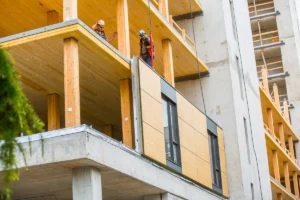
The Rise of Mass Timber: Cross-laminated timber (CLT) is making it possible for us to create tall wooden buildings. It is not only renewable, but it also works as a huge carbon sink, keeping CO2 locked up for as long as the structure stands.

One cubic meter of wood may hold almost one ton of CO2. When we construct with wood instead of steel, we aren’t merely “reducing” harm; we’re actually cleansing the air.
The Economic Heartbeat: Why Circularity Makes Sense
The change to circular architecture is also driven by hard-nosed economics, even though the environmental benefits are evident. In a time when supply chains are breaking down and resource costs are going through the roof, using “virgin” commodities is a huge financial risk.
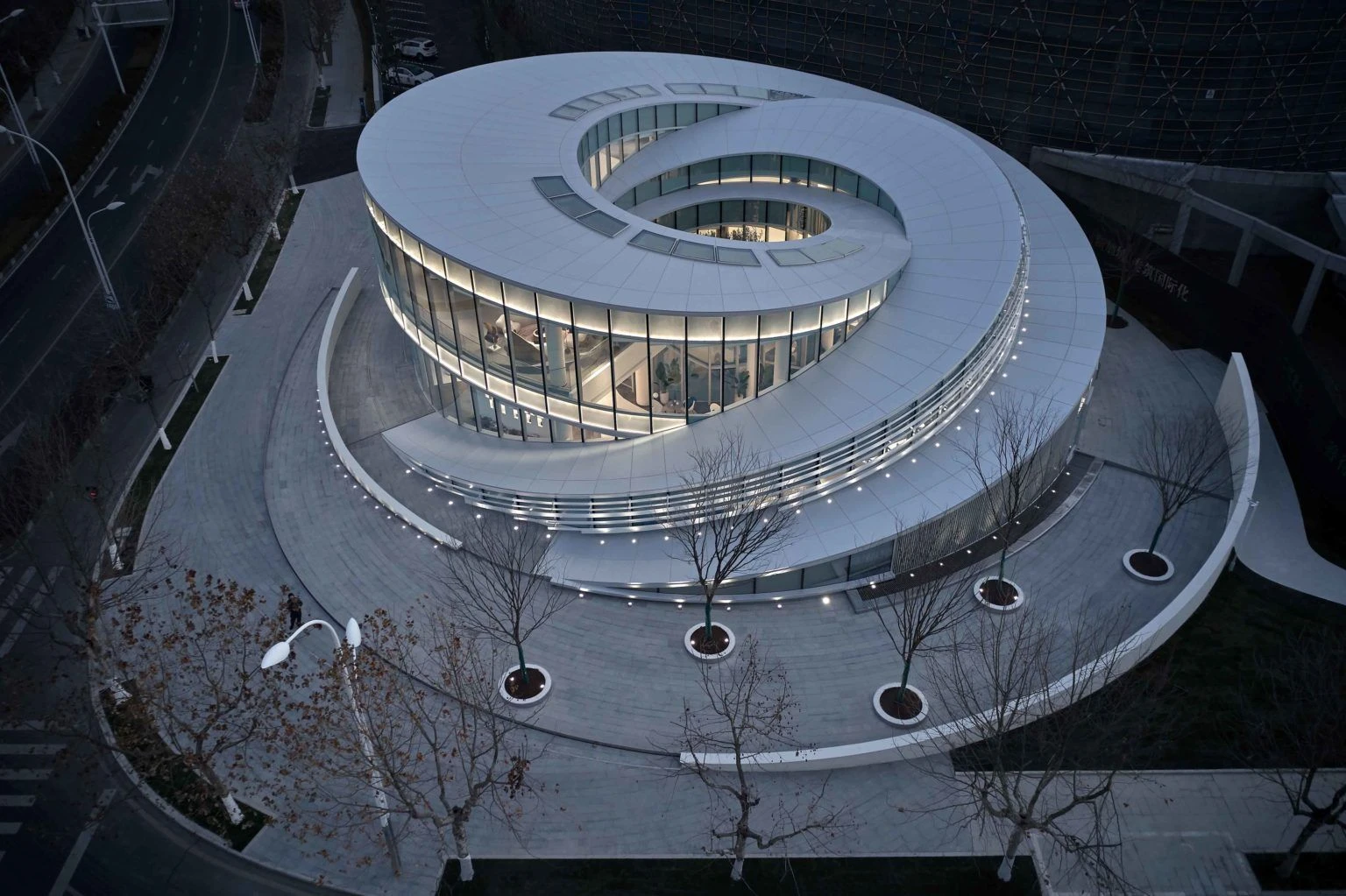
Main Factors Affecting the Economy:
- The Circular Premium: Buildings that are flexible are worth more on the market because they are “future-proofed” against tenants’ shifting needs.
- Regulatory Momentum: Governments are starting to pay attention. “Building Circularity Indicators” are being required all over the EU. Soon, you might have to pay taxes on the trash your building makes, which would make tearing it down the only way to save money.
- The $232 Billion Opportunity: The global market for construction debris is a goldmine. The tech giants of the coming decade will be the ones that know how to “upcycle” construction trash.
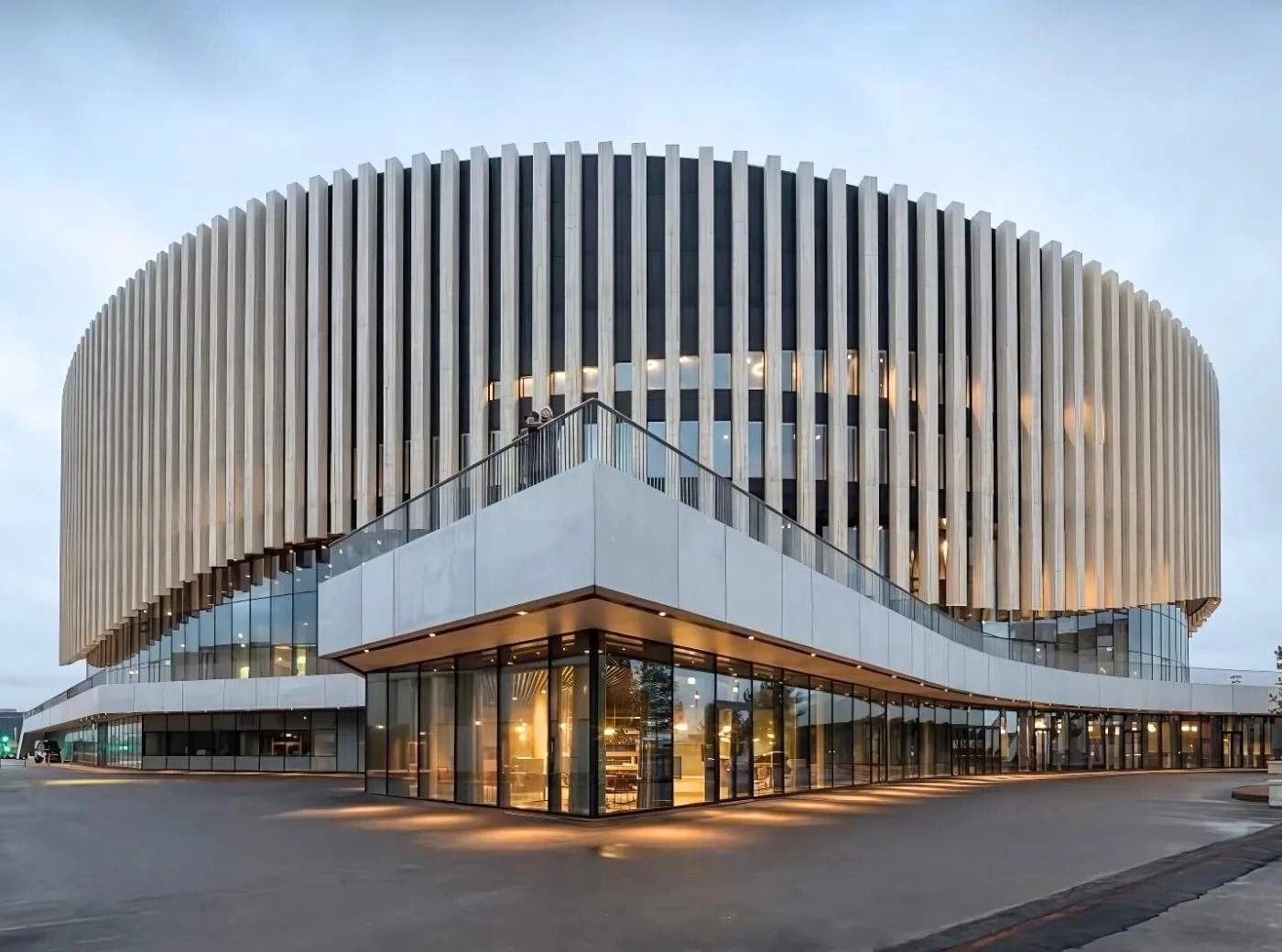
Conclusion: Building a Legacy, Not a Burden
The “Immortal Building” is proof of how smart people are. It shows that we don’t have to compromise between being comfortable and taking care of the Earth. By using circular architecture, we are changing from being “consumers” of the Earth to being “curators” of its resources.
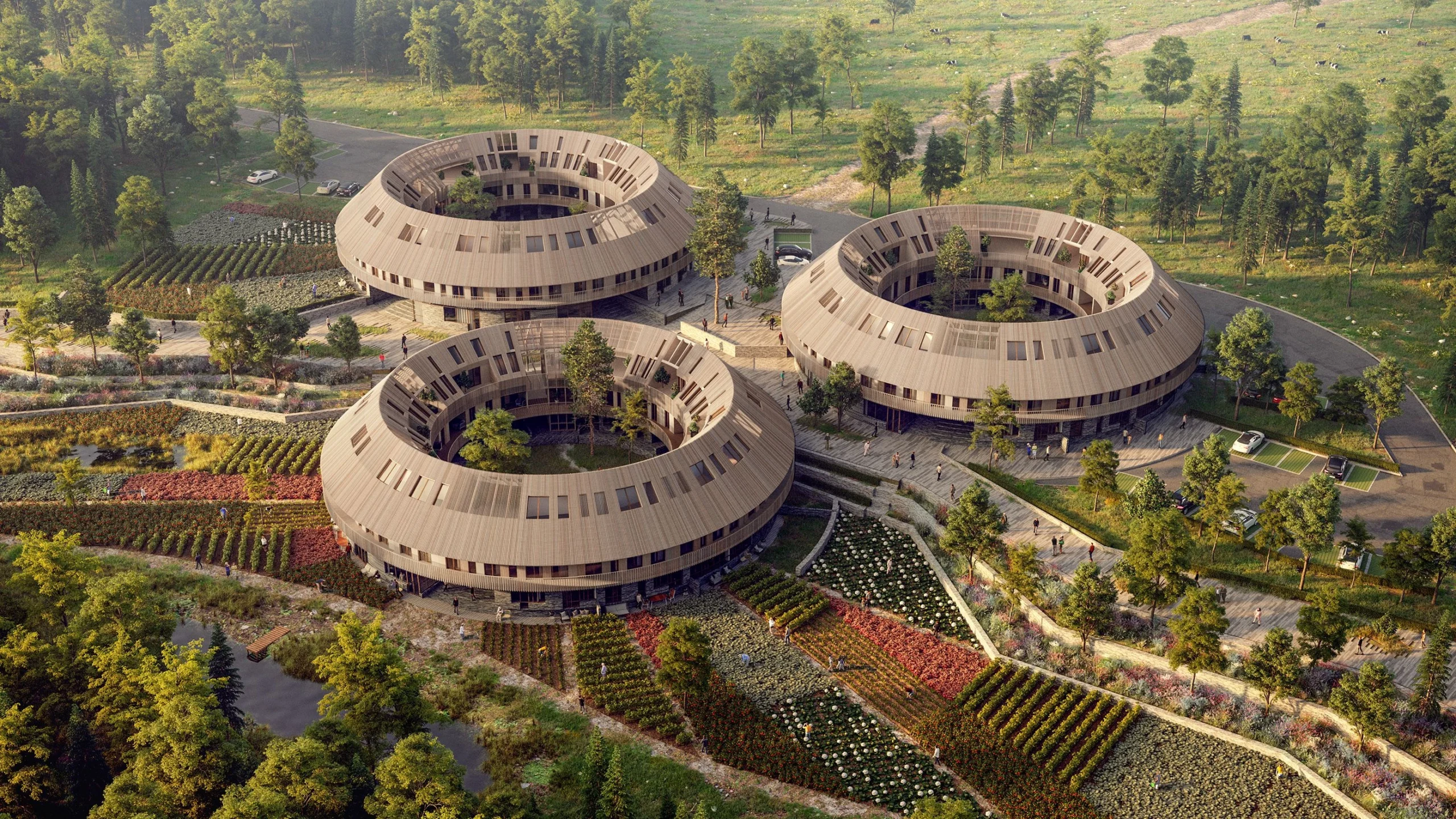
We are standing within a live promise when we step into a structure that was built for the circular economy. This promise says that our time on this earth will leave behind a legacy of healing instead of a mound of trash. We are finally understanding that we need to plan for the “end” from the start in order to develop for the future.
For more blogs like this CLICK HERE!!!
Reference:
Innovative Circular Architecture Concept: Redefining Urban Landscapes